Wabi Sabi Art: Finding Modern Peace in Imperfect Beauty
Your home doesn't need to look like a sterile showroom to be considered beautiful. The relentless pursuit of a "perfect" interior often creates a cold, uninviting atmosphere that adds to your daily stress instead of relieving it. It's frustrating when your decor feels too vibrant or lacks a sense of soul; many people find that standard minimalist wall art can feel detached or overly corporate. You deserve a living space that feels like a genuine retreat, where every texture and tone sparks a sense of calm and quiet acceptance.
We're going to show you how to transform your home into a tranquil sanctuary by embracing Wabi Sabi, the ancient Japanese philosophy of finding beauty in the imperfect and the organic. You'll discover how to move away from cold aesthetics toward a warmer minimalism that features earthy tones like sand, terracotta, and soft clay. This guide explores practical ways to blend this timeless wisdom with your modern lifestyle. We will walk through the essential elements of this aesthetic, how to select art that feels authentic to your journey, and the best ways to curate a home that honors the passage of time.
Key Takeaways
- Embrace the Japanese philosophy of Wabi Sabi to shift your home's aesthetic from cold perfection to warm, lived-in authenticity.
- Apply core principles like asymmetry and simplicity to create a balanced environment that mimics the peaceful irregularities of the natural world.
- Learn to choose minimalist wall art featuring muted palettes and organic forms that provide a sense of visual calm without overwhelming your room.
- Discover how to style your space by layering natural materials and subtle lighting to highlight the rich, textured details of your art.
What is Wabi Sabi Art and Why Does it Resonate Today?
Wabi Sabi is a Japanese philosophy that finds beauty in things that are imperfect, impermanent, and incomplete. In a culture that often demands flawless production, this aesthetic offers a refreshing alternative. It represents a significant shift in how we define luxury. Instead of seeing luxury as high-gloss perfection, modern home design now celebrates authenticity and the unique character of objects. Understanding What is Wabi-Sabi helps you see that a piece of art doesn't need to be pristine to be valuable; its very flaws provide its soul.
To better understand how these concepts are applied to physical creations, watch this helpful video:
This art style serves as a gentle visual reminder to slow down. When you look at a piece that features muted tones and organic shapes, it encourages a moment of mindfulness. It's about appreciating the integrity of natural processes and the passage of time. By focusing on visual markers like history and wear, you create a space that feels grounded and real.
The Philosophical Roots of the Aesthetic
The roots of this aesthetic reach back to Zen Buddhism and the concept of the three marks of existence. The term "Wabi" originally referred to the loneliness of living in nature, but it evolved to represent understated elegance and the joy of simplicity. "Sabi" refers to the beauty that comes with age and the visible wear of time. When selecting minimalist wall art for your home, look for pieces that honor these roots. These concepts encourage a less is more approach to decor, where you don't need a crowded gallery wall to make an impact. A single, meaningful print can speak volumes.
Visual Characteristics of Wabi Sabi Prints
One of the most striking features of this style is the preference for asymmetry over rigid, geometric balance. Nature rarely creates perfect circles or straight lines; your art shouldn't have to either. This irregularity creates a sense of movement and life within your home. Visual texture is equally important. Even a flat print can evoke the tactile feeling of weathered stone, raw linen, or handmade paper. This depth makes minimalist wall art feel substantial rather than empty. By utilizing negative space, these prints allow your walls to breathe. This openness is essential for creating a room that feels calm and expansive.
The Core Principles: Why Imperfection is the New Luxury
Luxury used to mean gold leaf and perfect symmetry. Today, it means honesty. The Core principles of Japanese aesthetics suggest that true value lies in the authentic rather than the flawless. This mindset transforms how we view minimalist wall art. Instead of looking for sterile precision, we look for presence. It's a shift from "perfect" to "personal." By embracing the imperfect, you create a home that feels like a living space rather than a showroom.
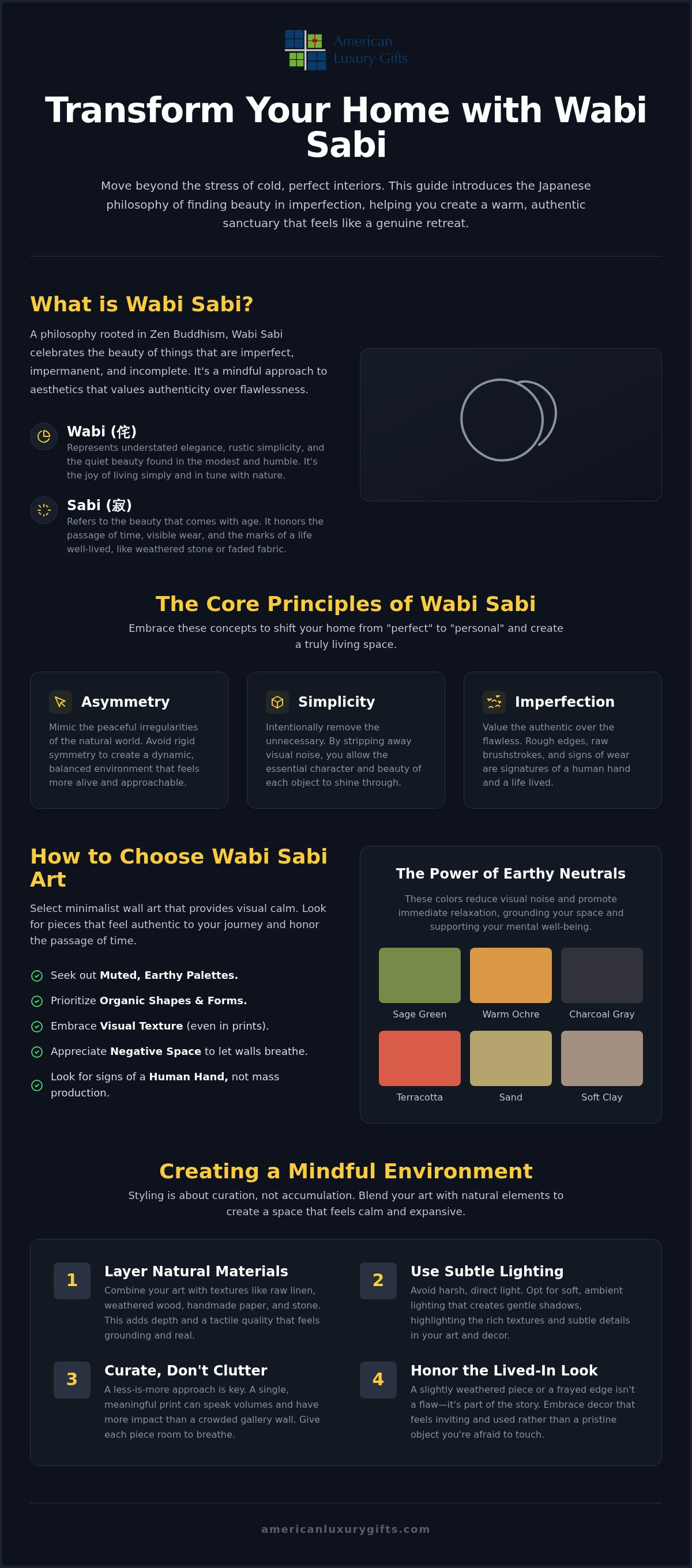
Simplicity isn't about absence; it's about the intentional removal of the unnecessary. By stripping away the noise, you allow the essence of a piece to speak. Asymmetry reinforces this. It mimics the natural world where no two trees are identical. This irregularity creates a dynamic harmony that feels alive and approachable. Using earthy pigments and organic themes grounds your living space. There's a profound beauty in transience, the way colors fade or materials age. It's a celebration of the passage of time that brings a sense of peace to any room.
Embracing the Beauty of the Unfinished
Rough edges and raw brushstrokes aren't mistakes. They're signatures of a human hand. These details create a personal connection that mass-produced decor simply cannot replicate. As an American-owned small business, we understand the value of pieces that feel intentional. A slightly weathered look feels more inviting and lived-in than a high-gloss finish that you're afraid to touch. Wabi Sabi rejects the generic, mass-produced look of current decor trends in favor of something with a real story.
This appreciation for materials that age with grace and tell a story of use is also found in premium travel gear. To see how these principles of durability and character apply to professional accessories, learn more about ALEON and their aluminum cases designed for a lifetime of travel.
The Power of Earthy Neutrals
The Wabi Sabi palette relies on sage greens, warm ochres, and charcoal grays. These colors reduce visual noise and promote immediate relaxation. Choosing these tones is a strategic move for your mental well-being. If you're interested in how color affects your environment, check out our guide on modern wall art for more on intentional decor choices. You can easily find these calming tones in our collection of Abstract Wall Art Prints, which are designed and printed in the USA to ensure lasting quality.
How to Choose Wabi Sabi Art for Your Home
Selecting the right piece requires looking beyond the frame and considering the physical environment of your room. Start by assessing the existing textures. If your space features raw wood grains, linen upholstery, or soft wool rugs, your art should complement these tactile elements. You want to look for prints that carry significant visual weight without being visually loud. A high-quality print can capture the depth of a weathered surface or the delicate grain of handmade paper, providing a sophisticated focal point that doesn't scream for attention.
Size plays a critical role in a minimalist layout. To maintain a true sense of calm, ensure there is plenty of breathing room around your minimalist wall art. Crowding a wall with too many pieces or choosing a frame that's too large for the space can create a feeling of clutter. Aim for a balance where the negative space of the wall feels as intentional as the art itself. This approach ensures your minimalist wall art remains a source of peace rather than a visual burden.
Matching Art to Your Room’s Emotional Intent
Think about how you want to feel in each specific space. Nature-themed Wabi Sabi is an excellent choice for areas where you want to feel connected to the outdoors and a sense of serenity. For a home office or workspace, consider abstract prints. These designs encourage creative flow and focus because they offer beauty without the distraction of a literal subject. Choosing unique wall art is also a powerful way to tell a personal story of growth and resilience through the decor you live with every day.
Consider these placements based on the feeling you want to cultivate:
- Bedrooms: Nature-themed prints to evoke serenity and rest.
- Workspaces: Abstract forms to stimulate creative flow without cluttering the mind.
- Entryways: Grounding textures like stone or earth tones to welcome you home.
Abstract vs. Nature-Themed Wabi Sabi
Abstract Wabi Sabi prints focus on the raw emotion of imperfection through form, shadow, and muted palettes. They are perfect for setting a mood rather than telling a specific story. In contrast, nature-themed prints provide a concrete focal point. An image of a single withered leaf or a gnarled branch celebrates the beauty of the natural lifecycle. You can successfully mix both styles to create a cohesive gallery wall; just ensure they share a similar color story to maintain visual harmony.
If you're ready to find a piece that resonates with your space, explore our curated selection of Animals & Nature Wall Art Prints. Each design is printed in the USA with the care you'd expect from an American-owned small business.
Creating a Mindful Environment: Styling Your Space
Styling a room with Wabi Sabi principles requires a shift in focus from the art itself to the relationship between the print and the objects surrounding it. To create a truly cohesive sanctuary, pair your minimalist wall art with tactile, natural elements. A hand-thrown ceramic vase or a piece of sun-bleached driftwood on a nearby shelf provides a physical counterpart to the visual textures in your prints. To discover how iconic furniture and accessories can complement your aesthetic, visit Kartell Singapore Flagship Store by Lifestorey. These additions ground the room, making the aesthetic feel intentional rather than accidental.
Lighting is your most powerful tool for highlighting the subtle details of a print. Use soft, directional light to enhance shadows and emphasize the "imperfect" textures of the design. Avoid harsh, overhead lighting that flattens the image. Instead, opt for wall-mounted picture lights or floor lamps that cast a warm glow. This interaction between light and shadow brings a dynamic quality to the space, mimicking the way light filters through trees or reflects off stone.
The Art of the Mindful Gallery Wall
If you prefer a collection over a single focal point, consider a mindful gallery wall. You can use black and white art to create a timeless look that feels both modern and ancient. To achieve a Wabi Sabi feel, try a floating layout. Instead of a rigid grid, space your art unevenly to mimic natural growth or the way stones settle in a river. Use simple, thin frames that protect the work without distracting from its soul. This approach allows the eye to wander naturally across the wall.
Emotional Impact: Living with Your Art
Interacting with grounded decor provides a daily reset for your nervous system. When you return home to a space that celebrates imperfection, the pressure to maintain a "perfect" life begins to fade. Wabi Sabi art acts as a visual permission slip to be imperfect yourself. It reminds you that growth is messy and beauty is often found in the unfinished parts of our journey. For those who want to blend this philosophy with daily encouragement, exploring motivational wall art can help reinforce a positive, resilient mindset every time you walk into the room.
Transform Your Home Into a Quiet Retreat
Embracing the Wabi Sabi philosophy means letting go of the pressure for a "perfect" home and inviting in a sense of genuine peace. By choosing minimalist wall art that celebrates organic forms and subtle textures, you create a space that feels grounded and authentic. These pieces serve as a daily reminder that there is profound beauty in the passage of time and the marks of a human hand. Your home should be a reflection of your personal values; it acts as a sanctuary where you can truly slow down and breathe.
As an American-owned small business, we take pride in offering meaningful decor that honors your unique journey. Every piece in our collection is designed and printed in the USA with a focus on quality and longevity. From grounding an entryway to bringing serenity to a bedroom, the right art changes how you experience your daily environment. We invite you to Explore our collection of Unique Abstract Wall Art Prints and find the perfect addition to your mindful home. Start curating a space that celebrates life just as it is.
Common Questions About Wabi Sabi Art
Is Wabi Sabi art the same as Minimalism?
Wabi Sabi and minimalism share a "less is more" philosophy, but they have different goals. Traditional minimalism often focuses on precision, clean lines, and a lack of ornamentation. Wabi Sabi, however, specifically celebrates the imperfect and the weathered. It adds a sense of soul and history to a space. While both styles reduce clutter, Wabi Sabi introduces an organic warmth that makes a room feel lived-in and authentic.
What colors are most common in Wabi Sabi art prints?
You'll primarily find earthy, muted tones in these art prints. The palette is inspired by the natural world, featuring colors like sand, sage green, warm ochre, and charcoal gray. These shades are chosen because they reduce visual noise and encourage relaxation. Unlike high-contrast modern styles, the Wabi Sabi palette avoids neon or overly vibrant colors. This ensures the art remains a quiet, grounding presence in your home.
Can I use Wabi Sabi art in a room with a lot of color?
You can definitely use these prints to balance a vibrant room. A piece of minimalist wall art with Wabi Sabi features acts as a necessary visual anchor in a space filled with bold colors. It provides a quiet area for the eye to rest. For the best results, pick a print that has a subtle undertone matching a color already in the room. This creates a bridge between the vibrant decor and the calming art.
How do I choose a frame for a Wabi Sabi print?
Select simple, natural frames that don't distract from the artwork's soul. Thin wooden frames in oak, walnut, or maple are ideal because they complement the organic nature of the aesthetic. Avoid high-gloss plastics or heavy, ornate metal frames that feel too industrial or formal. The goal is for the frame to feel like a natural extension of the art. This keeps the focus on the textures and forms within the print itself.
Why is Wabi Sabi art considered healing or calming?
This art style is calming because it removes the pressure of perfection. When you live with images of gnarled branches or weathered stone, you're reminded that life's "flaws" are actually part of its beauty. This philosophy encourages a mindset of acceptance and mindfulness. It transforms your home from a place where you feel judged by your decor into a sanctuary where you can truly relax and be yourself.
Is Wabi Sabi art suitable for a professional office setting?
It is a sophisticated choice for any professional environment. Using minimalist wall art with Wabi Sabi elements suggests a business that values authenticity and long-term resilience. The muted color palettes are particularly effective in boardrooms or creative studios because they don't cause visual fatigue. This style creates a grounded, welcoming atmosphere for both team members and clients. It helps maintain a steady, focused workspace that feels human rather than corporate.


