What Size Art for Above a Couch? A Practical Measuring Guide
A beautiful print can still feel out of place if its proportions don’t suit the sofa beneath it. If you’re wondering what size art for above a couch will look balanced, start with the couch width, not the blank wall. Measuring first helps you avoid a display that looks too small, overwhelms the seating, or feels disconnected from the room.
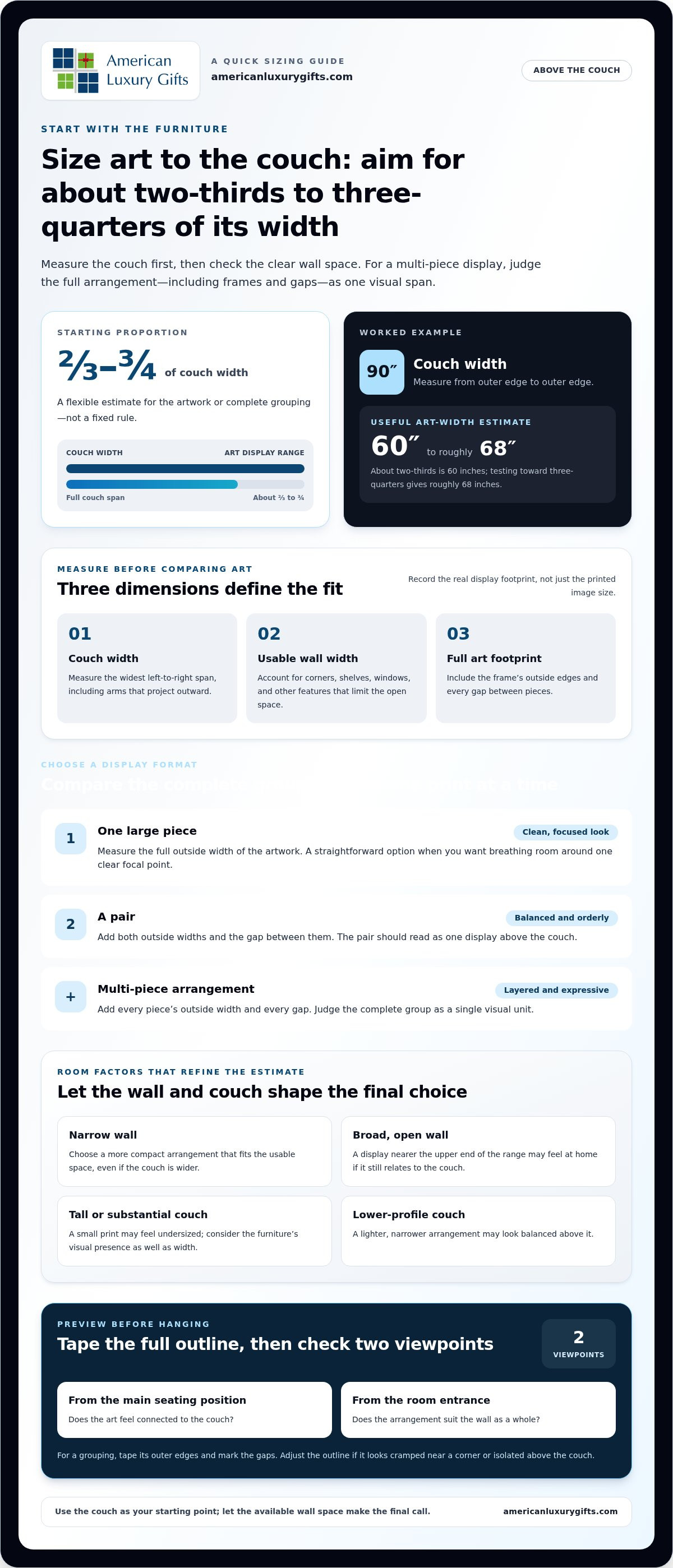
A reliable starting point is artwork, or a complete grouping, that spans about two-thirds to three-quarters of your couch’s width. This gives the art enough presence to feel connected to the furniture without letting it dominate. Treat the range as a first estimate, then consider the open wall and the proportions of the room.
In this guide, you’ll learn how to measure your couch and wall, compare a single print with a multi-piece layout, and preview the proportions before hanging anything. A paper or tape mock-up lets you judge the size in your own room, so you can choose meaningful art with more confidence, whether you’re drawn to inspirational, family, Christian, or patriotic designs.
Key Takeaways
- Use your couch width as the starting point when deciding what size art for above a couch will feel balanced.
- Measure both the couch and the clear wall space so your artwork fits the furniture and its surroundings.
- Compare a single piece, a pair, and a multi-piece layout by their total display width and visual feel.
- Preview the full arrangement from across the room to see whether the art feels connected to the couch, not just the blank wall.
What size art should you hang above a couch?
As a starting point, choose artwork or a complete arrangement about two-thirds to three-quarters as wide as your couch. This proportion gives the art enough presence to feel connected to the seating without making it dominate. It’s a flexible guide, not a fixed rule. Your wall’s width, the couch’s visual weight, and the arrangement’s shape can all affect what feels balanced in your room.
Start with artwork around two-thirds the width of your couch, then test the full arrangement against your wall and furniture.
How does couch width guide artwork width?
Measure the couch from its outermost left edge to its outermost right edge. Multiply that width by two-thirds to get a useful first estimate. For example, a 90-inch couch suggests an artwork arrangement about 60 inches wide. You can also test a somewhat wider grouping, up to roughly 68 inches, against the wall. Focus on the total visible span, not the width of each print on its own.
For a pair or gallery-style arrangement, include the gaps between pieces in that span. The complete group should read as one visual unit above the couch. This approach reflects the principles of interior design, where scale and placement help furnishings and decor feel cohesive rather than disconnected.
What can change the starting size?
A narrow wall may call for a more compact arrangement, even if the couch is wide. On a broad, open wall, a piece near the upper end of the range may feel more at home, provided it still relates clearly to the couch. Check the artwork against the usable wall space and consider how much breathing room remains at either side.
The couch’s height and visual presence matter, too. A tall-backed or substantial couch can make a small print feel undersized, while a lower-profile couch may look balanced with a lighter, narrower arrangement. Consider the furniture and art together instead of judging width in isolation.
If you’re planning around a frame, use its full outside dimensions, not just the printed image size. The frame adds to the visible width and changes how much wall the piece occupies. Outlining the complete dimensions helps you judge whether the art feels intentionally paired with the couch or isolated above it.
How do you measure your couch and wall before choosing art?
Measure the couch first, then measure the clear wall area above it. Use both dimensions to estimate a width that relates to the furniture and fits the space. Before choosing a print or grouping, outline its full dimensions with painter’s tape and check how it looks from the places where you usually view the room.
Record your couch width, the usable wall width above it, and the complete outside dimensions of the artwork arrangement you’re considering.
Which measurements should you record?
Follow this sequence to account for both the couch and the space around it:
- Measure the couch: Stretch a tape measure from its widest left edge to its widest right edge, including arms that project outward.
- Measure the usable wall: Note the clear width above the couch, accounting for nearby corners, shelves, windows, or other features that visually limit the space.
- Estimate the artwork width: Use the couch measurement as your starting reference, then make sure the planned art fits within the clear wall area.
- Record the full arrangement: Include the outside edges of the frame and, for multiple pieces, the gaps between them.
Write down both the couch width and usable wall width before comparing options. If the wall is narrower than the couch, let the available wall space guide your final choice instead of trying to match the couch’s full width.
How can you preview the size without hanging art?
Use painter’s tape to mark the proposed outer edges on the wall. For a multi-piece layout, tape around the entire group first, then mark the gaps between pieces so the outline reflects the complete display. This gives you a quick sense of the arrangement’s footprint before you hang anything.
Step back and view the outline from the main seating position, then look at it from the room entrance. From the couch, check whether the art feels connected to the furniture. From the entrance, notice whether the arrangement suits the wall as a whole. If it looks cramped near a corner or isolated above the couch, adjust the outline and review it again.
This preview makes deciding what size art for above a couch feel less like guesswork. Test a slightly narrower or wider outline before settling on a piece. The right dimensions should fit the open wall and still read as part of the seating area.
Should you choose one large piece or several artworks above a couch?
Choose one large piece for a clean, focused look, or arrange several artworks together for a more layered display. Either option can work if you assess the full display width and the wall space around it. When deciding what size art for above a couch, compare the complete arrangements, not just one print against several.
One piece
Total display width: Use the full outside width of the artwork.
Visual simplicity: Creates one clear focal point.
Wall space: A straightforward option when you want breathing room around the display.
A pair
Total display width: Add both outside widths and the gap between them.
Visual simplicity: Balanced and orderly, with more visual movement than one piece.
Wall space: Works when there’s room for the pieces and their spacing to read as one display.
Multi-piece arrangement
Total display width: Add every piece’s outside width and every gap.
Visual simplicity: More layered and expressive.
Wall space: Needs enough clear area for the complete grouping to feel intentional rather than crowded.
Illustration: Imagine a couch that’s 90 inches wide. A single 60-inch piece, two 28-inch pieces with a 4-inch gap, or three 18-inch pieces with two 3-inch gaps would each create a 60-inch display. These hypothetical layouts have the same total width, but the pair and grouping add visible spaces and more visual detail. Tape each outline to see which suits your wall.
When does one large artwork suit the wall?
A single piece is a straightforward choice when you want one focal point above the couch. Its full width can anchor the furniture without filling every part of the wall, leaving open space around the display. Tape out the artwork’s outside dimensions and view the outline from across the room to judge its scale alongside the couch.
When can a multi-piece arrangement work?
Grouped pieces can create a broader display and let you bring together different images or themes. Measure the entire group, not just one print: add the outside width of each piece and the spaces between them. Keep the gaps consistent so the display feels unified. If you’re choosing a meaningful print for your home, get help choosing meaningful wall art.
Let the wall’s usable width guide your final choice. A single print may feel more at ease on a tighter wall, while a pair or grouping can work when there’s enough space for the complete arrangement to breathe.
How can you tell if the artwork size looks balanced above your couch?
The size is balanced when the artwork feels connected to the couch, fits the usable wall, and looks intentional from across the room. Before deciding, check its relationship to the couch, its fit within the wall area, the total display width, and how it looks from your usual viewing spots. The art should complement the seating, not simply fill empty space.
What should you check in your room mock-up?
Stand back and assess the taped outline beside the couch. Does it feel proportionate to the furniture, or does it seem too small, too dominant, or detached? Check how it sits within the clear wall area and relates to nearby corners, windows, shelves, or other features. The full display width matters, especially when you’re previewing more than one piece.
Look from the main seating position and the room entrance. A size that seems right from directly in front of the couch may feel different from across the room. If the outline looks cramped, disconnected, or visually lopsided from either spot, adjust its dimensions or arrangement and review it again. Trust what feels cohesive in the room, not just what fits on paper.
- Couch relationship: Does the artwork feel visually connected to the couch?
- Wall fit: Does the outline sit comfortably within the available wall space?
- Total width: Have you considered the complete arrangement, including spaces between pieces?
- Room view: Does it look balanced from across the room and from the seating area?
How can the artwork feel personal as well as well-proportioned?
Once the scale feels right, choose a subject or message that belongs in your home. Inspirational art can add an encouraging note to a living room, while spiritual or family-themed art can reflect what matters to your household. Nature-themed prints may suit a quieter mood. Pair a fitting visual scale with a meaning you’ll appreciate seeing in your everyday space.
Choose a display that relates to the couch, fits the wall, and looks composed from the room’s usual viewpoints. The best answer to what size art for above a couch is the size that feels balanced in your actual space and makes the wall feel personal, not merely occupied.
Choose art that feels at home in your living room
The right artwork can do more than complete a wall. It can make your living room feel more like yours by reflecting the people, beliefs, and interests you share. Once you’ve settled on what size art for above a couch suits your space, let that personal connection guide the subject and message you’ll enjoy seeing every day.
American Luxury Gifts is an American-owned small business specializing in meaningful wall art and gifts. Explore inspirational, spiritual, family, and nature-themed prints to find art that feels at home in your space and reflects what matters to you.
A thoughtful choice can bring the room together and make the space feel unmistakably yours.
Frequently Asked Questions
How high should art hang above a couch?
Usually, leave about 6 to 10 inches between the couch back and the artwork’s bottom edge. Treat this as a starting point, since a tall couch, low ceiling, or unusually tall artwork can change how the gap feels. Mark the intended vertical position temporarily and check it from the seating area. The artwork should feel connected to the couch without appearing crowded by the sofa back.
Should framed artwork dimensions include the frame?
Yes. Use the finished outside measurement, including the frame and any mat, rather than relying on the image dimensions alone. The visible frame changes the piece’s footprint and the space it occupies. If a listing gives separate image and overall measurements, use the overall figure for planning. Keep your measurements in the same units as the artwork dimensions to make comparisons straightforward.
What size art works above a sectional couch?
Measure the sectional across its full outer width, including the return, then consider whether the open wall follows the same shape or sits mainly above the longest side. A long, low arrangement may suit the wall above the main seating run, while a more compact grouping can work better if the return leaves limited wall space. Judge the art in relation to the sectional’s overall footprint, not just one cushion or seat.
Can artwork be wider than the couch?
Yes, artwork can extend beyond the couch if the room’s layout supports a broader composition. It may feel at home when the wall is open and nearby furniture doesn’t create a competing edge. In a tight arrangement, the extra width can make the art seem disconnected from the seating. Consider its relationship to surrounding furnishings and walkways, not only the couch directly beneath it.
Does a low ceiling affect the art size above a couch?
A low ceiling can make a tall piece feel more imposing because there’s less open wall around it. That doesn’t rule out larger art, but a wide, shorter format may feel more settled than a tall one in some rooms. Notice how the artwork’s shape relates to nearby windows, shelving, or lighting, and view the proposed placement from across the room before deciding.
How do you choose art size for a small couch?
Choose in proportion to the couch and the available wall, rather than assuming a small couch needs tiny art. A single, well-scaled piece can give a compact seating area a clear focal point, while several small pieces may create more visual detail than the space can comfortably hold. Also consider nearby furniture: a side table or floor lamp can make an otherwise suitable arrangement feel crowded.


