Beach House Entryway Decor for a Natural Coastal Welcome
What if your entryway felt coastal without relying on anchors and seashells? A welcoming beach-house entrance can feel relaxed and polished through thoughtful choices, without a full makeover.
Beach house entryway decor works best when practical furniture, natural textures, and a restrained coastal palette come together. A console or bench can support daily routines, while a few well-chosen accents create a sense of place. Keep the layout open and functional so the entrance feels inviting and easy to use.
You’ll learn what defines a coastal entryway and how to use materials, beach-inspired details, and baskets to create a welcoming space. The goal is a thoughtful first impression that feels connected to coastal living.
Key Takeaways
- Use light wood, nature-inspired colors, and simple furniture to set a relaxed coastal tone.
- Layer natural textures such as woven fibers and wood, while keeping outdoor views open.
- Choose subtle coastal details over novelty motifs for a welcoming, considered look.
- Give baskets a practical role by using them to corral everyday entryway essentials.
- Consider Beach & Lake House Wall Art Prints when you want a coastal focal point on the wall.
First, what does a coastal entryway look like?
A coastal entryway pairs practical furniture with a light, nature-inspired atmosphere. Picture a pale-wood console beside a simple bench, with a clear path from the door into the home. Choose furniture to suit the entry’s width and daily use, rather than crowding the route or adding pieces that serve only as decoration.
Before shopping for furniture, decide what the space needs. A slim console provides a landing surface in a narrow foyer; a bench offers a place to pause in a wider one. In a compact entrance, choose one instead of squeezing in both. Check the door swing and walking path before settling on a piece.
Draw coastal colors from water, sand, and greenery. White and off-white create a calm base, while muted blue, green, beige, or sandy yellow adds character. For example, keep the walls light and repeat muted blue in a single accent, such as a cushion or vase. A subtle stripe introduces pattern without dominating the room.
What entryway rugs work well with sand and wet feet? Choose a durable, patterned rug that collects debris and helps disguise marks. A vintage Persian rug is another option for sandy, wet foot traffic because it is weighty and durable.
What lighting and mirror styles suit a coastal entryway? A pendant or sconce can provide light and a focal point. A woven shade adds texture, while a clean-lined fixture feels more contemporary. A well-placed mirror can reflect daylight and make the entrance feel more open.
Architectural details can also set the mood. White shiplap or simple wall molding adds dimension behind a console without requiring extra accessories. In a contemporary home, pair clean-lined furniture with a sculptural mirror; for a softer look, choose pale finishes and understated patterns.
Bring the choices together by considering the room’s proportions first, then selecting furniture for a specific daily purpose and settling on a restrained palette. A light console, warm-white walls, and one muted accent can create a welcoming coastal feel while keeping the entry comfortable to use.
Pale or whitewashed wood, seagrass or jute rugs, and linen fabrics can give a coastal entryway a naturally imperfect look. Blue-green slate flooring resists scratches from sand and stains from water.
Natural materials and nature-inspired decor
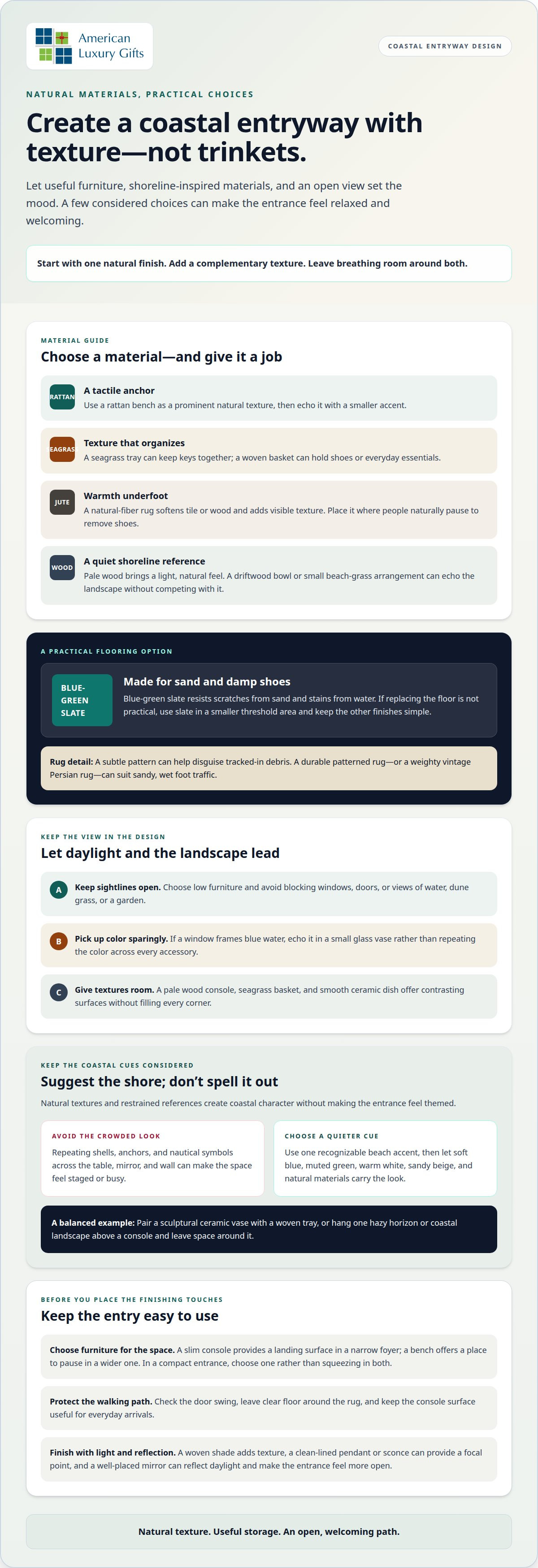
Jute, rattan, seagrass, and driftwood bring shoreline textures indoors without relying on novelty motifs. Start with one prominent material, such as a rattan bench, then echo it in a smaller accent. A seagrass tray on the console can complement the bench and keep keys together.
For flooring exposed to sand and damp shoes, blue-green slate offers a practical, nature-inspired option. It resists scratches from sand and stains from water, while its color connects with coastal surroundings. If replacing the flooring isn’t practical, use slate in a smaller threshold area and keep the rest of the entry’s finishes simple.
Natural-fiber rugs soften tile or wood and add warmth underfoot. Jute and seagrass bring visible texture, while a subtle pattern can help disguise tracked-in debris. Place a rug where people naturally pause to remove shoes, and leave enough clear floor around it for easy movement.
Let the view guide your material choices. If the entry opens toward dune grass, water, or a garden, keep furniture low and avoid blocking the sightline with tall decor. A driftwood bowl or small arrangement of beach grass can echo the landscape without competing with it. Unobstructed windows and doors preserve the connection to the outdoors.
Woven details work best when they serve a purpose. A wicker basket can hold shoes, while a raffia-wrapped console adds texture to a plain wall. Grasscloth brings a soft, layered surface, and a sculptural mirror reflects daylight. Together, these choices create coastal character through materials and shapes rather than obvious beach symbols.
Use a simple sequence to keep the room balanced: choose a main natural finish, add one complementary texture, then leave space around both. For example, pair a pale wood console with a seagrass basket and a smooth ceramic dish. Their contrasting surfaces give the eye distinct details without filling every corner with woven accents.
Use outdoor views to guide the entry’s colors and layout. If a window frames blue water, pick up that tone in a small glass vase rather than repeating it across every accessory. Keep the windowsill clear, angle furnishings away from the opening, and let daylight reveal the wood grain, woven fibers, and view beyond.
Avoiding kitschy beach motifs
A coastal entryway feels considered when it suggests the shore rather than spelling it out. Instead of lining a console with anchor figurines, choose a driftwood bowl or framed shoreline scene. Natural textures and restrained references create a welcoming mood without making the room feel themed.
Start by editing repeated symbols. A single shell-shaped dish can feel personal; shells on the mirror, table, and wall may look staged. Keep one recognizable beach accent, then let color, shape, and materials define the rest of the entry. For example, pair a sculptural ceramic vase with a simple woven tray.
Use color as a subtle coastal cue. Soft blue, muted green, warm white, and sandy beige suggest the sea, dune grass, and shore without literal imagery. Choose one color for a small detail, such as a blue cushion on a bench, then echo it in a nearby print or glass vase. This creates a visual thread without repeating the same motif.
Choose artwork for its mood and palette, not just its subject. A hazy horizon, abstract water-inspired shapes, or a coastal landscape can suggest the beach subtly. Hang one piece above a console, leaving space around it. A wall crowded with signs, shells, and nautical symbols can compete with the artwork and make the entrance feel busy.
Balance decorative objects with the entryway’s practical needs. A lidded basket can hold shoes, while a plain ceramic dish catches keys. These useful pieces add texture without turning storage into a display. Keep the console top clear enough for everyday arrivals, and avoid placing fragile ornaments where bags or wet jackets could knock them over.
Materials can create a coastal feeling more gracefully than novelty accessories. A pale wood frame, linen cushion, or woven shade adds softness and texture. For contrast, combine a rough surface with a smooth one, such as a driftwood accent beside a clean-lined ceramic lamp. The contrast helps each object stand out.
Before adding another beach-themed item, step back and take in the whole entry. If it already has blue accents and a shoreline print, a natural-fiber rug may add more than another anchor or seashell. This simple edit keeps the design relaxed, gives useful objects room to breathe, and makes the coastal character feel connected to the home.
Beach-inspired decor and storage baskets
Make storage part of the coastal look by choosing baskets for specific jobs. A tall basket can hold umbrellas or rolled beach mats, while a lidded one keeps shoes out of sight. Woven fibers add texture, and clear categories make it easier to put items back where they belong.
For shoes, place a sturdy basket or open shoe bin beside the door, where sandy footwear can come off without being carried across the room. Choose an open style for daily pairs and a lidded option for shoes you use less often. Keep the basket within reach of a bench but outside the main walking path.
Give beach gear its own landing place. Use a tall basket for umbrellas and a separate container for small items such as sunscreen or dog leashes. A shallow tray on the console can catch sunglasses and keys. Giving each category a home keeps beach-day essentials from spreading across the floor and furniture.
Wet towels need different handling from dry shoes and gear. Hang them on hooks near the entry or in a nearby laundry area so they can dry, rather than placing them directly in a woven basket. Keep the hook area tidy with a simple finish, such as wood or brushed metal, that complements the room.
Add depth with basket placement and contrast, not extra decoration. Set a textured basket beneath a smooth console, or pair a pale woven container with a darker wood bench. A small coastal print above the storage can connect this functional corner to the rest of the entry without adding more beach symbols.
Choose basket shapes to suit what they hold. A tall, narrow basket works for umbrellas, while a wider one accommodates shoes or beach accessories. Lids conceal clutter; open baskets keep frequently used items easy to grab. Keep the arrangement simple and give each container a clear purpose.
The practical takeaway: create separate landing spots for shoes, dry beach gear, and wet towels. For example, place a shoe basket beside the bench, an umbrella holder near the door, and hooks for damp towels. This arrangement keeps the entrance orderly while woven storage contributes naturally to the coastal design.
American Luxury Gifts: Beach & Lake House Wall Art Prints
American Luxury Gifts offers Beach & Lake House Wall Art Prints to create a clear coastal focal point in your entryway. A print can bring shoreline character to a blank wall without adding another object to the console or floor. It’s a natural option when your furniture and storage already work but the entrance still feels visually unfinished.
Choose artwork to complement the room’s existing colors and materials. A coastal image can connect with sandy neutrals, pale wood, or blue-green accents already in the entry. For example, artwork above a light-wood bench can make the seating area feel intentional. A print near the door can also set the tone before guests enter the main living space.
Placement matters as much as subject. Hang a print above a console to define an arrival point, or use it to bring interest to a narrow stretch of wall. Keep it clear of coat hooks and door swings, and leave enough space around the frame so baskets and furniture don’t compete for attention.
For a home that leans more toward landscapes than beach imagery, Animals & Nature Wall Art Prints offer another way to reflect the outdoors. Choose based on the feeling you want at the entrance: a direct coastal reference, a nature-centered accent, or a quieter connection to the surrounding landscape. Keep the artwork’s colors in step with the room’s existing palette.
Before choosing a print, identify the wall that needs attention and decide what you want the artwork to do. A piece above a bench can anchor a place to pause, while art on a bare wall adds personality without taking up floor space. Let the existing entryway guide your choice rather than adding decor just to fill a surface.
Beach & Lake House Wall Art Prints can complete a welcoming entry when you want coastal character on the wall. Explore the artwork that feels right for your home, then contact American Luxury Gifts with any questions.
Frequently Asked Questions
What are popular beach house entryway decor styles?
Popular styles include relaxed contemporary, classic nautical, and nature-inspired coastal. Contemporary rooms tend to favor spare forms and abstract shoreline references; classic nautical rooms may include traditional maritime details; nature-inspired spaces draw on landscapes and organic shapes. Choose a style that fits nearby rooms. For instance, an abstract coastal print will feel more cohesive with a contemporary living room than a collection of novelty signs.
What colors work best for a coastal entryway?
Choose colors that relate to the rooms visible from the entrance, not just the coastal theme. If the adjoining space has warm undertones, sandy beige and soft white can create a smooth transition. Cooler interiors may suit blue-green accents. Carry one existing color into the entry through a small decorative detail to create continuity without repainting or introducing a separate palette.
How can I add coastal decor without making an entryway feel cluttered?
Give the entry a focal point and let the other pieces support it. If a framed landscape draws attention, keep nearby surfaces free of competing signs or decorative collections. A rotating display can keep the look fresh: store seasonal objects and bring out only pieces that suit the current mood. This makes the room easier to maintain while preserving its personal character.
How can I decorate a small beach house entryway?
In a small entry, use decor that works vertically or serves more than one purpose. A wall-mounted hook rail can hold everyday bags, and a compact mirror can reflect available light without taking up floor space. Keep the door area easy to navigate by prioritizing what you use daily. If the entry opens directly into another room, echo one accent from that room to make the transition feel intentional.
What are affordable beach house entryway decor ideas?
Refresh the space with small changes before replacing furniture. Rearrange a framed print from another room, display a piece of driftwood, or use a simple bowl you already own for keys. Reworking existing items can shift the mood without a full redesign. Choose changes that solve a real need, such as adding a place for keys or creating a clearer landing spot for bags.
For a warm welcome, choose one focal point and make sure the entry supports your everyday routine. Decide what you want guests to notice first, then adjust the surrounding details to complement it.


