Lake House Wall Art: A Thoughtful Buying Guide
Choosing lake house wall art is easier when you start with the feeling or memory you want it to bring into the room. A familiar shoreline may recall favorite summers, while a nature-inspired design or a lighthearted print can reflect how your family spends time together. The right piece should feel personal and suit the wall, room, and home where you plan to display it.
Before choosing, consider the artwork’s subject and mood, measure the space where it will go, and compare those details with the room’s existing décor. A direct lake scene can make the setting clear, while a subtler image can evoke the feeling of lake life without making the room feel overly themed.
This guide walks you through comparing styles, planning placement, and choosing a meaningful piece for your home or as a gift. These practical steps can help you find art you’ll enjoy beyond a single vacation or season.
Key Takeaways
- Choose lake house wall art for the memory or mood you want it to express, not just for a literal lake image.
- Compare pieces by subject, atmosphere, personal meaning, and the room where you plan to display them.
- Measure the available wall space and consider nearby furniture before choosing a piece.
- Use each product’s images and description to understand what the listing actually shows.
- Explore the Beach & Lake House collection for a piece that suits your home or makes a thoughtful gift.
What makes lake house wall art feel right for your home?
Lake house wall art is artwork selected for a home by the water, a room used for lake getaways, or a household with a strong connection to lake life. It might reflect the setting, bring a favorite memory to mind, or help create a particular mood. A good choice suits both the people who live there and the space where they’ll see it.
Lake-house style can be more personal than a general coastal look. It might call to mind quiet mornings, a wooded shoreline, family gatherings, or time spent on the water. You don’t need a literal lake scene to capture that feeling. The principles of interior design, including how elements work together in a room, can help you think about how a piece relates to the rest of your space.
Start with personal relevance, then consider how the artwork will look in the room. Ask what you want the piece to bring to mind and whether its mood fits the people and activities in that space.
What can lake house wall art communicate?
Art can bring to mind time at the lake, a family tradition, or a favorite place you share with others. Use those associations to guide your choice, rather than treating them as a checklist of imagery the artwork must contain. A view of the water may feel meaningful, but so can a quieter subject that reminds you of a familiar lakeside mood.
For example, a calm image may suit a shared room where family members relax after spending time outdoors. In a room used for lively meals and conversation, you might prefer a more energetic feel. Think about who uses the room and choose a subject and mood that fit.
How do you avoid a look that feels too themed?
Choose one clear lake-related connection instead of layering many literal references throughout the room. Look at the art and décor already on your walls, then decide how strongly you want the lake theme to stand out. If the room already has several water-related details, a subtler piece can help keep the overall look balanced. If the connection is understated, a direct lake reference can give the room focus.
The meaning doesn’t have to be obvious to every visitor. A piece might remind your family of a favorite tradition or the feeling of unwinding by the water, even if its subject isn’t unmistakably a lake. That personal association can make the art feel at home without turning the whole room into a theme.
How do you compare lake house wall art before buying?
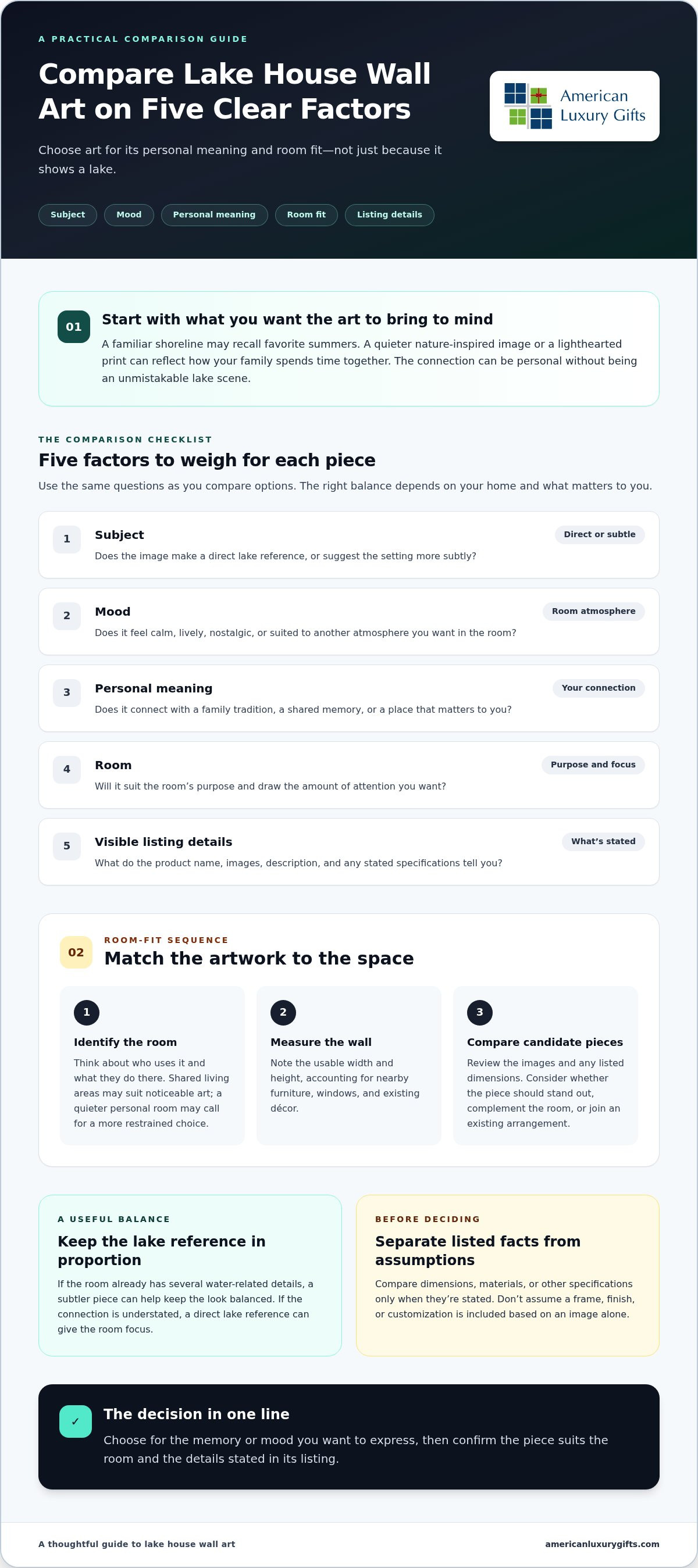
Compare each piece by its subject, the mood it creates, its personal meaning, and the room where you plan to display it. Then review the product images and description for the details provided. This keeps your decision grounded in what you like and what will suit your home, rather than a quick reaction to a small thumbnail.
| What to compare | Questions to ask |
|---|---|
| Subject | Does the image make a direct lake reference, or suggest the setting more subtly? |
| Mood | Does it feel calm, lively, nostalgic, or suited to another atmosphere you want in the room? |
| Personal meaning | Does it connect with a family tradition, a shared memory, or a place that matters to you? |
| Room | Will it suit the room’s purpose and the attention you want the artwork to draw? |
| Visible listing details | What do the product name, images, description, and any stated specifications tell you? |
A simple comparison can make your priorities clearer. One piece might feel meaningful enough to become the focal point in a gathering room, while another may have a quieter mood that complements the space without drawing as much attention. Consider the psychological impact of art in interior design as you think about how each option could shape the feeling of the room.
Which subject and mood fit your lake home?
First decide whether you want a direct lake reference or a more understated connection. Then compare the actual images and descriptions. Which piece feels restful for a room where you unwind? Which feels more expressive? Judge each option on what is shown, rather than assuming a particular subject or style based on the collection name.
What should you check in a product listing?
Note the exact product name and the details provided on each page. Compare dimensions, materials, or other specifications only when they’re stated in the listing. Don’t assume that a frame, finish, or customization is included based on an image alone. Writing down the details can help you separate what you know from what you’re guessing.
Once you know what matters most, browse the Beach & Lake House collection and compare the available pieces using the same criteria.
How do you match lake house wall art to a room?
Start with how you use the room, measure the wall, and compare pieces that suit both. A shared living area may call for a more noticeable focal point, while a bedroom or reading nook might feel better with a quieter image. Let the room’s purpose guide the mood and how much visual attention you want the artwork to draw.
- Identify the room. Consider who uses it and what they do there. A shared living area may suit art that welcomes attention and gives guests something to notice. A quieter personal room might call for a more restrained choice that supports a restful atmosphere.
- Measure the available wall space. Note the width and height you can use, accounting for nearby furniture, windows, and existing décor. These measurements give you a practical boundary as you compare options.
- Compare candidate pieces. Review the product images and any dimensions shown in the listing. Consider how each piece would sit alongside your furnishings and whether it should stand out, complement the room, or join an existing arrangement.
Where could lake house wall art make the most sense?
Shared living spaces, entry areas, and bedrooms can all work, depending on your home and the feeling you want to create. In a living area, a more noticeable piece could anchor a wall you want to use as a focal point. In an entry space, art can help establish the home’s character. In a bedroom, a quieter subject may feel more fitting. Picture each option beside the furniture and décor already there before deciding where to hang it.
How can you choose an appropriate scale?
Start with your measurements, then use this guide to think through the artwork’s presence in the room:
- Focal wall: Compare pieces that can hold attention without crowding nearby furnishings.
- Smaller wall: Look for an option whose listed dimensions suit the available area.
- Existing art grouping: Consider how a new piece will relate to the arrangement’s overall presence and visual balance.
There’s no single size that works for every room. If you’re unsure, use removable tape to mark the dimensions of a piece on the wall, then compare that outline with the furniture and décor nearby. For a gallery arrangement, research on arts participation and well-being offers another perspective on the role art can play in people’s lives. As you plan, think through how a new piece will relate to the others in your display.
How can you choose a meaningful piece from the lake house collection?
Start with the connection you want the art to express, then compare pieces by their names, images, descriptions, and any stated specifications. The Beach & Lake House collection is a natural place to explore lake house wall art. For a confident choice, consider both the people who will live with the piece and the room where it will hang.
How can you choose lake house art as a gift?
Think about the recipient’s relationship to lake life and what you want the gift to say. Does the lake remind them of family getaways, a favorite place to unwind, or time spent with friends? Let that connection guide your choice instead of selecting a piece only because it seems broadly lake-themed.
For example, if you’re thanking a host who welcomes family to a lake home, look for a piece whose visible subject or mood feels connected to shared gatherings. For a friend who prefers a calmer home, compare options that seem quieter in their images and descriptions. These are ways to narrow your search, not claims about particular designs in the collection. A wall-art gift feels considered when it reflects what the recipient values and where they might display it.
What should your final comparison checklist include?
Choose a few promising listings and compare them side by side. Record each exact product name so you can return to the right page, and use only information actually shown in the listing.
- Personal relevance: Does the piece connect with the recipient’s relationship to lake life?
- Room placement: Is there a space where its subject and visual presence make sense?
- Visual preference: Which image best suits the recipient’s taste and the room’s existing décor?
- Listing details: What dimensions, materials, or other specifications are explicitly stated?
Let the displayed images and descriptions guide your comparison. For a gift, prioritize the connection it expresses; for your own home, focus on how it will live in the space. In either case, choose based on what matters most to you, whether that’s personal meaning, room placement, or visual style.
Make your next choice feel like home
The right lake house wall art doesn’t need to capture every part of lake life. It can simply add a detail that feels familiar, welcoming, and true to the people who gather there. As you browse, consider which pieces you can imagine enjoying on an ordinary morning, during a family visit, or long after a vacation ends. That everyday connection can help a favorite find its place in your home throughout the year.
Give yourself time to compare the pieces that caught your attention. Trust the one that feels most at home in your space or most fitting for the person you’re celebrating.
Your lake home should feel like yours. Browse the Beach & Lake House collection to find lake house wall art that suits your space or makes a thoughtful gift.
Frequently Asked Questions
Can lake house wall art work in a home that is not on a lake?
Yes. Lake-inspired art can bring a relaxed, nature-focused note to a home without a waterfront view. In an apartment or city home, for example, a print might add a visual pause in a busy hallway or reading corner. To connect it with the rest of the room, repeat a color or visual detail from the artwork in a nearby pillow, rug, or other accent. If you are updating the wider space, exploring flooring options on franklyflooring.co.uk can help you find complementary tones and finishes that anchor your wall art seamlessly.
What makes lake house wall art a thoughtful housewarming gift?
It can help a new home feel more personal, especially if the recipient has a meaningful connection to lake life. For a housewarming gift, consider a shared space, such as a living room or dining area, rather than making assumptions about a private room. If you know the recipient’s decorating preferences, use them to guide your choice.
How do you choose lake house wall art for someone else?
Use what you know about the recipient’s home and taste, and avoid guessing about details you haven’t seen. If you’ve visited, recall the colors and overall feel of a room they use often. If you haven’t, think about a shared memory or lake-related interest that can guide your choice. Compare the product images and stated details to find an option that feels personal and suits the recipient.
Does lake house wall art have to show a lake?
No. The connection can come from a nature-focused subject, a sense of open space, or a feeling associated with time outdoors. If you want the piece to read as lake-inspired without showing a shoreline, look for visual cues that you personally associate with the setting. A direct lake image may be easier for guests to recognize, while a less literal reference leaves more room for personal interpretation.
Can lake house wall art suit a home all year?
Yes. Treat the artwork as a lasting part of the décor and change smaller accents around it if you want a seasonal refresh. For example, cushions or table details can shift without requiring the wall art to change. This lets you enjoy a lake-inspired atmosphere in everyday life, not only during a holiday or vacation.
How can you combine lake house wall art with family photos?
Plan a gallery arrangement that gives both the artwork and photographs room to stand out. You might place a lake-inspired piece near family pictures from a shared trip, then create visual order by aligning the top or bottom edges of the frames. Before hanging anything, lay out the arrangement on the floor or trace each frame’s outline on paper. Adjust the spacing and balance before making holes in the wall.


