Botanical Print Set of 3: How to Choose a Cohesive Trio
A botanical print set of 3 can feel cohesive without showing the same plant in every image. Look for a shared visual thread, such as a similar color palette, illustration style, subject, or mood. That connection helps the trio read as one display while giving each print room to stand out.
To choose a set for your home or as a gift, first decide what should connect the images. Then consider the room’s colors, where you plan to display them, and the recipient’s interests. A few practical checks can help you choose a grouping that feels considered rather than generic.
Key Takeaways
- A botanical print set of 3 works best when the images feel related without appearing identical.
- Use the art’s mood and subject matter to guide your choice for a particular room and personal taste.
- Plan the wall and viewing context before arranging the trio as one visual grouping.
- For a gift, connect the botanical theme to the recipient’s interests, your relationship, and the occasion.
What makes a botanical print set of 3 feel cohesive?
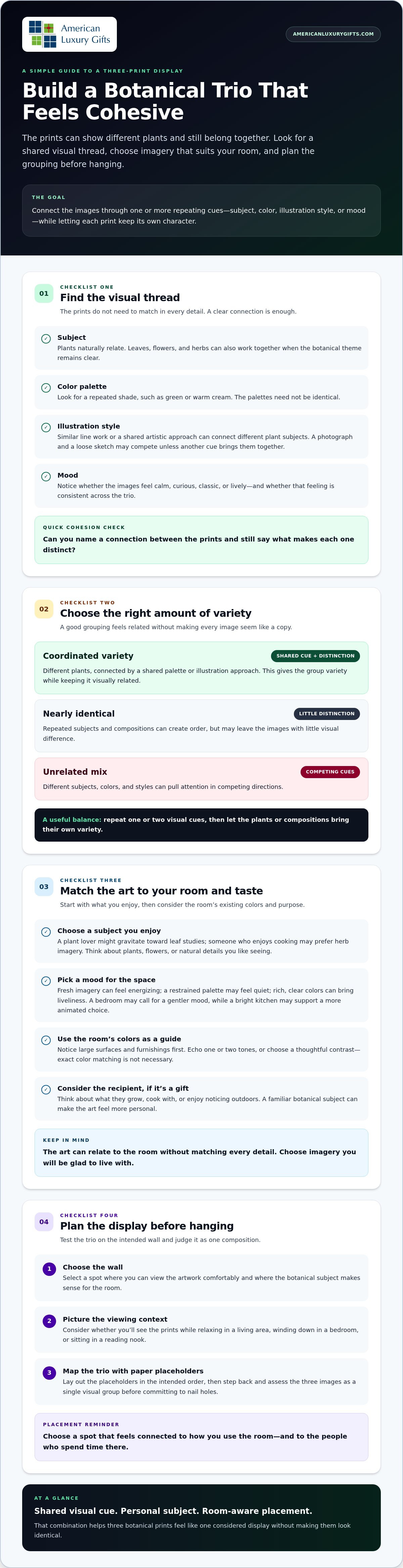
A strong trio shares visual cues while allowing each print to have its own character. A botanical print set of 3 is a group of three nature-focused images chosen to work together. The images might connect through their plant subjects, color family, illustration approach, or overall mood. When one or two of these elements repeat, the grouping feels considered without looking overly matched.
Look for a clear thread between the images, not a requirement that every detail align. Different plants, for example, can feel harmonious when they share similar line work and a restrained palette. Botanical illustration combines artistic choices with the careful depiction of plants, as explored in this overview of botanical illustration. That balance can help you judge whether a trio shares a visual language.
Which visual cues help three botanical prints belong together?
Start with the subject matter. Three images of plants naturally feel related; a mix of leaves, flowers, and herbs can also work if the nature theme remains clear. Next, compare colors. The prints do not need identical palettes, but a repeated shade, such as green or warm cream, can create continuity. Finally, consider illustration style and mood. Detailed studies may sit comfortably together, while a photograph and a loose sketch may compete unless another strong cue connects them.
Visual cohesion means the prints share enough in subject, color, style, or mood to read as a group, while each still offers something distinct.
Should all three prints show the same type of plant?
No. Repeating one kind of subject creates order, while related subjects introduce variety. Three different leaf studies can feel calm and consistent. Flowers, leaves, and herbs can feel more collected and lively when their colors or illustration styles relate. Choose the balance that suits your taste: a repeated subject makes the connection immediate, while a broader botanical mix gives each image more variety.
- Coordinated variety: Different plants, with a shared palette or illustration approach.
- Nearly identical: Repeated subjects and compositions with little visual distinction.
- Unrelated mix: Different subjects, colors, and styles that pull attention in competing directions.
Compare the prints as a group. If you can name a clear connection and still describe what makes each image unique, the trio is likely to feel cohesive without looking repetitive.
How do you choose botanical prints that suit your room and taste?
Start with what you want the art to express, then consider the room’s colors and purpose. A quiet bedroom may suit a softer mood, while a kitchen can welcome livelier plant imagery. The art does not need to match every detail in the room. Aim for a relationship with the existing decor while choosing imagery you genuinely enjoy.
Use this quick guide to narrow your direction:
- Subject preference: Which plants or natural details do you genuinely enjoy seeing?
- Visual mood: Should the grouping feel calm, curious, classic, or lively?
- Intended room: What feeling suits the space, and what will the art sit near?
How should you choose botanical subject matter?
Begin with plants, flowers, or nature imagery that appeals to you. A plant lover might gravitate toward leaf studies, while someone who enjoys cooking may prefer herb imagery. These are ways to guide your search, not assumptions about what any particular collection contains. If you are choosing for someone else, consider what they grow, cook with, or enjoy noticing outdoors. A familiar subject can make the art feel more personal.
What palette and mood should guide your choice?
Notice the room’s dominant colors before choosing a visual direction. Look at large surfaces and furnishings first, then choose botanical prints that echo one or two tones or offer a thoughtful contrast. Exact color matching is not necessary. The goal is a pleasing relationship, not a perfect replica. Green details, for example, can complement natural accents, while softer neutrals may suit a quieter setting.
Think about mood in plain language. Fresh imagery can feel energizing; a restrained palette may feel quiet; rich, clear colors can bring liveliness. A classic mood may come from balanced compositions and familiar plant subjects. Picture the art in its intended room: a bright kitchen may support a more animated choice, while a bedroom may call for something gentler. Let your taste and the room’s purpose guide the decision.
For more ideas on connecting artwork with a room’s character, explore How to Choose and Style Wall Art Prints for a Meaningful Home. American Luxury Gifts offers Animals & Nature wall art prints for shoppers drawn to nature-focused decor. Use your room’s existing colors as a guide, then choose a subject and mood you will be glad to live with.
How should you plan the display for a botanical print trio?
Choose the wall, consider where you will view the art, and arrange the three images as one visual group before hanging. This helps you judge the composition in its real setting. Paper placeholders let you test the arrangement before committing to nail holes or relying on guesswork.
- Choose the wall. Look for a spot where you can view the artwork comfortably and where its botanical subject makes sense for the room.
- Identify the viewing context. Consider whether you will see the prints while relaxing in a living area, winding down in a bedroom, or sitting in a reading nook.
- Map the trio. Lay out paper placeholders in the intended order, then step back and assess the group as a single composition.
Where can a botanical print trio work well?
A trio may suit a living area, bedroom, or reading nook, depending on the room’s purpose and how you relate to the images. In a reading corner, nature-focused art can complement a quiet place to pause. In a living area, it can add a botanical note to a shared space. Think about who spends time there and whether the subject feels right for that setting. The best placement is one that feels connected to how you use the room.
How can you plan spacing and arrangement before hanging?
Lay out the three images in the order you are considering, either on the floor or with paper placeholders on the wall. Swap the left and right images, or try placing the strongest visual element in the center. Then check the arrangement from the spot where you will usually view it. Look for balance across the group, not just three individually appealing prints.
Use paper cutouts that match the prints’ actual dimensions so you can judge the planned arrangement more accurately. Check the specific listing for print dimensions and any included display components, since these depend on the item. For broader grouping ideas, How to Create a Gallery Wall with Unique Art Prints can help you plan beyond a single trio.
How can a botanical print set of 3 become a meaningful gift?
A botanical print set of 3 can be a thoughtful gift when the subject connects to the recipient’s interests and the occasion suits wall art. Consider who the person is to you, what they enjoy about nature, and whether they have a place where they might display it. The personal connection matters more than assuming how the gift will make them feel.
Which recipient and occasion suit botanical wall art?
Botanical wall art may suit a plant-loving friend, a family member who enjoys spending time outdoors, or someone celebrating a new home. Let the recipient’s taste lead. A housewarming gift might reflect the new homeowner’s interest in plants, while a birthday gift could nod to a garden they care for. Your relationship can guide how personal the subject feels, but avoid choosing based only on generic gifting rules.
Before settling on a gift direction, consider four details:
- Recipient: Who will live with and enjoy the artwork?
- Relationship: What personal detail or shared interest can the gift recognize?
- Occasion: Does nature-themed art feel appropriate for the moment?
- Botanical interest: Does the recipient enjoy particular plants or nature imagery?
What should you review before choosing a gift set?
Review the product listing for its stated details rather than assuming dimensions, presentation, or what comes with the art. Then consider the recipient’s home: is there a wall or room where botanical imagery could feel at home? If you are unsure, think about the spaces they use most and whether they already display nature-inspired art. That can help you choose with care without presuming what their decor looks like.
Nature-themed wall art is one meaningful gift category at American Luxury Gifts. The brand offers physical wall art, including nature-focused prints, so you can consider botanical imagery as part of a gift chosen around someone’s interests. Start with the recipient, then choose artwork suited to their taste and the occasion.
For help thinking through a meaningful wall-art choice, contact American Luxury Gifts.
Make your next art choice personal
Before choosing, picture how you want the artwork to fit into everyday life. A botanical print set of 3 might be a quiet detail you notice during a morning routine or a reminder of a person or place you care about. Let that personal meaning guide your decision.
Compare your favorite options and imagine living with them over time. The strongest choice is one that feels right to you, not one selected only to follow a decorating rule.
Trust your eye and the meaning behind your choice. Explore American Luxury Gifts’ Animals & Nature wall art prints to find nature-focused artwork that suits your space or makes a thoughtful gift.
Frequently Asked Questions
Can three botanical prints show different plants and still look cohesive?
Yes. Connect different plants through a shared idea, such as showing stages of growth or focusing on distinct parts of plants. A trio might feature a seed head, a leaf, and a flower, creating a small visual progression. This gives the images a relationship beyond simply depicting nature, while allowing each print to introduce a different shape or subject.
How do you choose botanical prints to match a room’s colors?
Consider the room’s lighting as well as its colors. Daylight and artificial light can change how wall colors and artwork appear, so view the room at the time you are most likely to enjoy it. If you are comparing options online, remember that a screen cannot show exactly how a print will look in your home. Choose a palette that feels comfortable in the room’s usual light.
Is a botanical print set of 3 a thoughtful housewarming gift?
It can be a considerate housewarming gift for someone who enjoys nature-themed art. A short note explaining why you chose the subject can make the gesture more personal without assuming how the recipient will respond. If they are still settling in, choose art they can place as their home takes shape rather than assuming it will suit a particular wall right away.
What should you look for when buying a botanical print set online?
Check that the listing describes a coordinated group, not just several images shown together as inspiration. Confirm how many prints are included and look for a clear description of what arrives. Review the listed dimensions and any stated display details so you can plan for the item. If the product images show variations, make sure the option you select matches the subjects you intend to purchase.
Can botanical prints work in a room that is not decorated with plants?
Yes. Botanical imagery can complement a room through its shapes and patterns, even if you do not keep plants there. The curves of leaves or branching stems might echo forms in a rug, lamp, or other decor, creating a subtle connection without adding greenery. You can also choose botanical art simply because you enjoy the subject. A room does not need a plant theme for nature imagery to feel at home.
How do you arrange three botanical prints before hanging them?
Consider the direction of the forms in each image. If stems or leaves angle to one side, arrange the prints so those lines guide the eye through the group rather than outward toward the edges. Try different orders and look for visual movement. This small adjustment can make the arrangement feel more intentional, especially when the images have distinct shapes or compositions.


