Inspirational Quotes Art for Uplifting Walls and Rooms
What if the words on your wall could feel personal, not just uplifting? Inspirational quotes art can encourage you in a creative space, give a room a clear point of view, or express your family’s shared values. The best choice is a message that feels true to the people who will see it every day.
A meaningful quote can change the feel of a room. The challenge is finding words that suit both the setting and the relationship behind them. Art for a home office might celebrate persistence or imagination, while a living-room print could reflect love, gratitude, or the bond your family shares.
Explore ideas for uplifting walls, creative spaces, artistic inspiration, and family and relationship settings. You’ll also find practical ways to choose a phrase and design that suit the room, so the finished piece feels considered, welcoming, and distinctly yours.
Key Takeaways
- Choose a motivating message that fits the room and gives you a meaningful reminder during your day.
- Use words about curiosity, courage, or practice to create an encouraging atmosphere for artistic work.
- For family and relationship decor, focus on a message that reflects the people and values it represents.
- Make quote art easier to read by considering the phrase, typography, color, and placement together.
- Explore inspirational prints to find a design that suits your space or makes a thoughtful gift.
Motivational and Uplifting Quote Wall Art
Motivational wall art pairs a concise message with a design that suits its setting. Inspirational quote art can also keep a creative idea in view as you work.
Uplifting Messages for Wall Displays
Choose a message that names the feeling or action you want to keep close. “Believe, achieve, succeed” suggests steady progress, while “Look for rainbows” offers a gentler reminder to notice hope. In a home office, a focused phrase can frame your work area. In a studio, a message about persistence can encourage you to begin again.
Consider the words, layout, and room together. A brief phrase can read clearly above a desk, while longer wording may need more open wall space. “Positive mind” makes a compact statement; “Your own kind of beautiful” carries a more personal tone. Choose language you’ll still value after the first glance, not just words that match a passing mood. A quote display should feel connected to the room, not like an afterthought.
Creating Quote Prints and Wall Decor
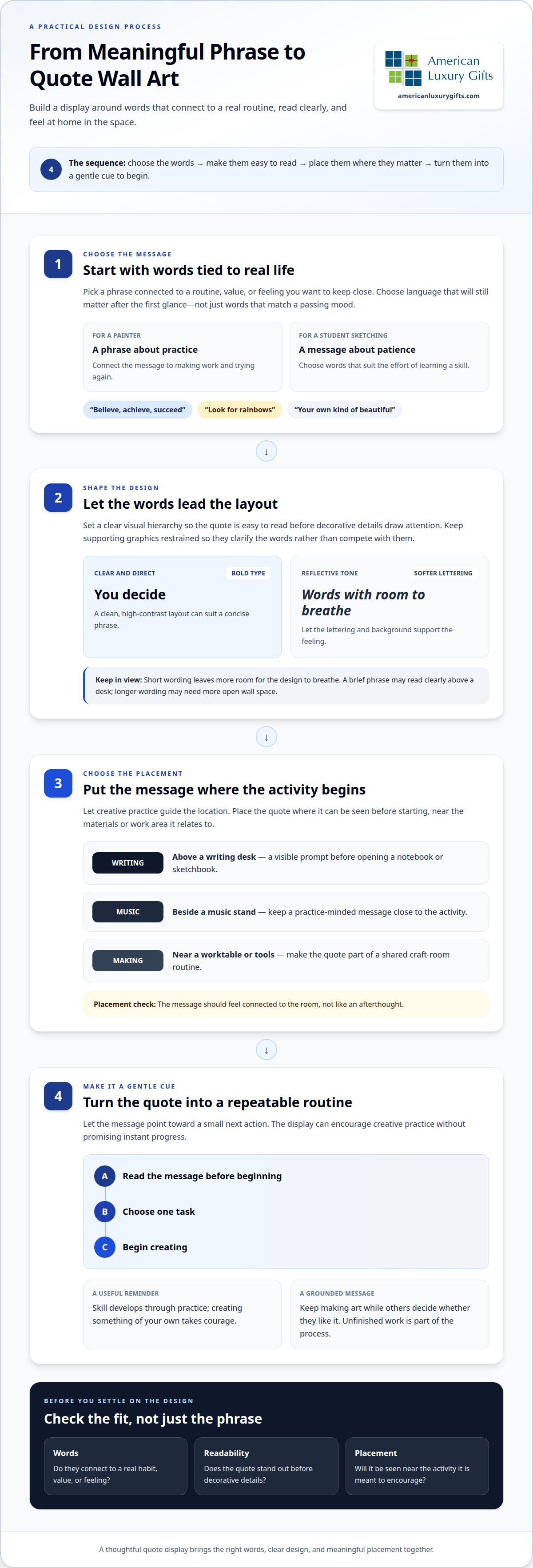
Start with words that connect to a real part of your routine. A painter might choose a phrase about practice, then place it near brushes or a worktable. A student sketching after class could use a message about patience near a notebook. Striking, memorable phrasing can make a quote effective for art. Short wording also leaves room for the design to breathe.
Next, shape the visual hierarchy so the quote is easy to read before decorative details draw attention. Pair a bold typeface with a simple background, or use softer lettering for a reflective message. For example, “You decide” can suit a clean, high-contrast layout. Keep supporting graphics restrained so they clarify the words rather than compete with them.
Let creative practice guide placement. Put a quote where you’ll see it before beginning, such as above a writing desk or beside a music stand. Skill develops through practice, and creating something of your own takes courage. A phrase reflecting either idea can support a studio’s purpose without promising instant progress.
Then make the message part of a repeatable routine. Read it before opening a sketchbook, choose one task, and begin. Keep making art while others decide whether they like it. That idea can suit a shared craft room, where unfinished work is part of the process. Place the print near the tools you use most, and let its words point toward your next small action.
Art and Creativity Quotes
Art and creativity quotes can express the values behind making something, not just the finished result. A quote often attributed to Henri Matisse says that creativity takes courage, an idea that suits a studio where experiments matter. It can also encourage a beginner facing a blank page. Choose a line that reflects the work you want to do, such as trying unfamiliar colors or drawing without a fixed plan.
A quote often attributed to Kurt Vonnegut connects practicing art with the growth of the soul, whether the work succeeds or not. That thought can resonate in a craft room where learning matters more than polish. A quote with this perspective can remind you to keep practicing. Pair it with a sketchbook display or a shelf of works in progress to make the message feel grounded.
A saying attributed to Scott Adams distinguishes creative mistakes from artistic choices, suggesting that art involves knowing which mistakes to keep. This idea fits a printmaking table or a home office used for design. It celebrates thoughtful editing without demanding perfection. For a visual treatment, use a clean layout and a small, hand-drawn mark to echo the idea of revision.
A saying often attributed to Salvador Dalí offers another direction: focus on making rather than reaching an impossible ideal. That message may suit a shared classroom, a sewing corner, or a personal writing desk. The setting helps shape the tone. In a classroom, choose legible lettering and a simple background; in a private workspace, a more expressive composition may feel at home.
A saying attributed to Nona Stephens links a break from painting with losing strength, underscoring the value of regular creative practice. A quote inspired by that idea could sit near a paintbrush holder, guitar stand, or writing supplies. Before choosing a phrase, ask what it should prompt: starting, experimenting, revising, or continuing. Then choose language brief enough to remember and specific enough to feel relevant. The strongest art-and-creativity message reflects an actual habit, not a vague promise of success.
A quote can invite action rather than judge the result. A saying often attributed to Salvador Dalí cautions against fearing perfection, since it is unattainable, a reminder to leave room for unfinished attempts and unexpected outcomes. A saying attributed to Nona Stephens links going seven days without painting with becoming weak, making a regular place for tools or a visible prompt especially fitting. Keep the display close to the materials it encourages someone to use, so the words can serve as a gentle cue to create.
Family and Relationship Quote Designs
Family quote art feels meaningful when its words reflect how people live together. “Family rules” can suit a shared room because it points to household values, not one person’s achievement. Quote art for a family space can celebrate belonging, gratitude, or the small rituals people share. Start with the relationship and feeling you want the design to express.
For a living room, choose a message that welcomes everyone who gathers there. A phrase about kindness or togetherness can feel natural above a sofa or near family photos. In a kitchen, a lighthearted line may suit the everyday rhythm of shared meals. The room’s purpose helps determine whether the message should feel reflective, playful, or reassuring.
For a gift, consider your relationship with the recipient and the occasion. A newly married couple may appreciate words about building a life together. Parents celebrating a family milestone might prefer a message that honors connection across generations. For a close friend who feels like family, choose wording that recognizes the bond without relying on a formal title.
Specific language gives a design more emotional weight. “The moon and back” expresses affection through a familiar image, while a phrase about home can speak to the comfort of returning to loved ones. A message doesn’t need to name every family member to feel personal. It should sound like something the people in that home would recognize as true.
Design choices also shape the tone. A bold, simple layout can make a household motto easy to read across a family room. Softer lettering may suit a bedroom or quiet reading corner. If the phrase already carries strong emotion, keep decorative details restrained. A meaningful quote print can complement family photos when its wording adds meaning without competing with the images.
Before choosing, read the phrase aloud and picture it in the intended room. Ask whether it represents the recipient, suits the occasion, and will still feel welcome in everyday life. A family reunion gift may celebrate shared roots; an anniversary design may honor a couple’s partnership. Choose words that reflect a real bond, then match their visual tone to the space where that bond is lived.
How Can I Create Attractive Art Quote Prints or Wall Decor?
Create attractive quote art by choosing meaningful words, arranging them for easy reading, and matching the design to its setting. A phrase above a writing desk can use a focused layout, while a family-room print may suit warmer colors. Keep the message central, then add visual details that support its tone.
Start with a phrase that feels memorable and specific. Choose wording that is clear, concise, and appropriate for the person, room, and mood you have in mind. “Creativity takes courage” is brief and direct; a longer passage may need more space and careful line breaks.
Use these steps to shape the design:
- Choose the message. Write down the idea the print should express, such as patience, courage, or gratitude. Select wording that clearly carries that meaning.
- Set the visual priority. Make the main phrase stand out. For a quote with a short closing thought, give the central words the strongest visual presence.
- Arrange the lines. Break wording at natural pauses. A phrase like “Make room for wonder” can sit on one line, while longer wording may read better in several balanced lines.
- Select type and color. Pair expressive lettering with a quiet background, or use restrained type with a vivid accent. Keep the words readable against the surrounding color.
- Add supporting imagery. A small leaf, pencil mark, or abstract shape can reinforce a message about growth or making. Avoid details that compete with the quote.
Next, consider how the print will relate to its surroundings. A high-contrast design can draw attention above a desk; softer colors may sit comfortably beside a bookcase. For a gallery wall, repeat a color from nearby artwork so the quote feels connected without matching every piece.
Finally, review the design from the distance where people will see it. Read every line aloud and remove words that weaken the point. A finished print should communicate its message quickly, while its typography, color, and imagery give the room a thoughtful visual accent.
Young artists can choose quotes that resonate with them and use those words in artwork, making the design a personal expression.
American Luxury Gifts
American Luxury Gifts offers motivational and inspirational wall art prints to help you find a meaningful quote for a room or gift. If you know the feeling you want to express but haven’t settled on the right design, start by considering the recipient, setting, and message together. This makes it easier to choose art that feels relevant, not just visually appealing.
For a home workspace, look for words about persistence or confidence. For a creative room, a message about courage or practice can reflect the work done there. In a shared home, a family-centered quote may feel more fitting than a message about individual achievement. American Luxury Gifts’ inspirational wall art prints offer designs for different moods and spaces.
Think about the role the art should play before narrowing your choices. A gift for a graduate may recognize a new beginning; a piece for a family room can express belonging. A quiet bedroom may call for a gentle sentiment, while a kitchen can suit a more playful tone. The best fit depends on what the message means to the people who will see it.
Use these points to guide your selection:
- Choose the purpose. Decide whether the piece will encourage, celebrate, comfort, or express affection.
- Name the setting. A desk, living room, or entryway each creates a different context for the words.
- Consider the recipient. A close friend, family member, or colleague may connect with different language.
- Match the visual tone. Look for a design that feels at home with the room’s existing atmosphere.
These choices are especially useful when selecting a meaningful gift. A message that reflects someone’s values or a relationship you share can feel more considered than a generic decorative accent. Choose a family-focused sentiment for relatives who gather often, or a motivational phrase for someone beginning a new chapter. Let the message lead, then consider how its design suits the space.
Frequently Asked Questions
What are the most inspiring quotes about art and creativity?
Inspiring art quotes often speak to courage, persistence, or the freedom to experiment. Henri Matisse’s statement that creativity takes courage is a concise choice for someone starting a new medium. A general message about finding inspiration through practice suits a studio or classroom without relying on an uncertain attribution. Choose a quote that reflects the maker’s current practice, rather than one that promises talent or instant success.
What are short inspirational art quotes for captions?
Short caption ideas include “Make something meaningful,” “Follow the color,” and “Keep creating.” These are original suggestions, not quotations attributed to a known artist. Match the words to the image: “Follow the color” can accompany a vivid painting, while “Keep creating” suits a work in progress. For a post showing several pieces, use a caption that describes the series instead of repeating the same phrase.
Should I include the artist’s name with a quote?
Include an attribution only when you can confidently connect the wording to its speaker. If you’re unsure, don’t attach a famous name; use an original caption or present the words without attribution. For example, a classroom display can feature your own phrase about curiosity. This keeps the message clear and avoids presenting an uncertain quotation as someone else’s words.
How can I choose a quote for an art gift?
Start with the recipient’s connection to art, then choose wording that suits their experience. A beginning watercolorist may appreciate a message about exploration, while an experienced musician might prefer one about discipline. For a graduation gift, consider language about creative possibilities rather than a narrow prediction. A brief note explaining why you chose the phrase can make the gift feel more personal.
How do I make quote art easy to read in a busy room?
Use a clear typeface, strong contrast, and uncluttered surroundings. In a room with patterned wallpaper or colorful furniture, a simple background can help the words stand out. Keep the phrase short enough to read at a glance, especially in a hallway or entryway. Before settling on the layout, view a printed draft from the distance where people will usually see it.


