7 Reasons Fuji Crystal Archive Paper Fades and How to Stop It
Last Updated: October 30, 2026
Quick Summary
Yes, crystal archive paper can fade over time, but display and storage conditions matter more than the paper itself. Prints typically last decades in dark storage but noticeably shorter in direct sun, since cumulative light dose, UV, heat and humidity drive the clock. Framing with UV-filtering glazing and keeping prints out of direct sun slows fading.
- Dark storage in an album, box or drawer keeps color stable for decades.
- Open display in direct sun is the shortest-lived scenario by far.
- UV-filtering glass or acrylic blocks most ultraviolet rays that attack dye stability.
- Fading usually appears first as a color shift, with cyan dyes in skies and blues going earliest.
- Ask your lab which Crystal Archive product line and generation was used, plus the processing date.
Table of Contents
- Does Fuji Crystal Archive Paper Fade Over Time?
- How Long Do Photo Lab Prints Last?
- What Fading Actually Looks Like and How to Spot It Early
- How to Prevent Photo Prints From Fading
- Does Photographic Paper Go Bad?
- How to Identify Which Paper Version You Own
- Why Crystal Archive Paper Still Beats Inkjet for Wall Art
- Choosing Wall Art Built to Hold Its Color
- Frequently Asked Questions
Does Fuji Crystal Archive Paper Fade Over Time?
Yes, Crystal Archive paper can fade, but the conditions matter more than the paper itself. Crystal Archive is a silver halide color negative paper with a dye image, and its stability depends heavily on display and storage.
Here is the honest version most guides skip: "fade-resistant" is not "fade-proof." The Aardenburg Imaging & Archives light-fade testing database added Fujicolor Crystal Archive Type II to its test results, and its samples accumulate light exposure over time like every other paper.
Below, we break down real-world expectations by storage type, show you how to spot early color shift, and give you the preservation steps that actually work.
How Long Do Photo Lab Prints Last?
Most photo lab prints last decades in a dark drawer and a handful of years on a bright wall. The paper is only half the equation. Processing conditions, paper generation, and display environment do the rest.
Dark Storage vs. Framed Display vs. Open Display
Print longevity splits into three very different scenarios. Treat them separately or your estimates will be wrong.
| Storage Type | Typical Expectation | Main Threat |
|---|---|---|
| Dark storage (album, box, drawer) | Decades of stable color | Heat, humidity, chemical contact |
| Framed under glass, indirect light | Many years of good color | UV rays, heat buildup behind glass |
| Open display, direct sun | Noticeably shorter life | Daily light exposure, UV |
A print in an album and the same print on a sunny windowsill are not the same object after five years. Dark storage is generally gentler than display, and direct sun is the most damaging condition.
Why the Year Estimates You See Online Don't Always Match Your Print
Most longevity claims for Crystal Archive paper come from manufacturer data sheets and from independent light-fade testing, and both are measured under specific conditions that rarely match a living room. Independent testing, such as the Aardenburg Imaging & Archives light-fade testing database, reports how a sample's density and color shift as it accumulates a measured dose of light.
That is why a single "lasts X years" figure can be misleading. When you compare claims, check three things: the paper version tested, the light dose or display condition assumed, and whether the endpoint was a just-noticeable shift or a clearly failed print.
A Scenario-by-Scenario Way to Read the Numbers
Instead of hunting for one universal figure, match your situation to the closest scenario:
- Archival dark storage (acid-free enclosure, stable cool-dry room, no light): the strongest case for Crystal Archive, where dye fade is driven mainly by heat and humidity rather than light.
- Framed behind UV-filtering glazing, indirect light: a middle case. UV glazing removes most of the highest-energy exposure, but visible light still accumulates dose over years, and heat can build behind glass in a sunlit room.
- Framed without UV glazing, indirect light: shorter than the UV-filtered case, because the glazing is no longer removing the UV band.
- Open display, no glazing, direct sun: the shortest case by far, and the one where forum anecdotes about a year or two of good color become plausible.
If you cannot identify your paper version or processing date, assume the middle case and protect the print anyway. Framing and placement buy you more years than any single paper upgrade.
What Actually Drives the Clock
Four variables move the timeline more than anything else:
- Cumulative light dose, not just brightness, but brightness multiplied by hours. A dim wall lit all day can out-dose a bright wall lit for an hour.
- UV content, the highest-energy part of the spectrum does disproportionate damage to dye images, which is why UV-filtering glazing matters.
- Heat, warm conditions accelerate chemical reactions in the dye layer, and heat trapped behind glass in sun is a common hidden factor.
- Humidity and chemical contact, damp conditions and acidic or plasticized materials in contact with the print speed degradation.
Control those four and you are controlling the outcome far more than by chasing a paper spec sheet.
What Fading Actually Looks Like and How to Spot It Early
Fading rarely shows up as "washed out." It usually arrives as a color shift first.
Watch for these early signs:
- Color shift: neutrals drift pink, yellow, or cyan before overall brightness drops
- Yellowing in whites: white borders or highlights go cream-colored
- Loss of shadow detail: dark areas turn muddy and flat
- Cyan dye loss: skies and blues fade first, since cyan dyes are often the weakest link
Distinguish fading from other damage. Water stains have hard edges. Foxing looks like brown spots. Scratches catch the light. True fading is even and gradual across the whole print.
How to Prevent Photo Prints From Fading
Prevention comes down to controlling light, heat, and moisture, in that order. You cannot stop time, but you can slow the chemistry.
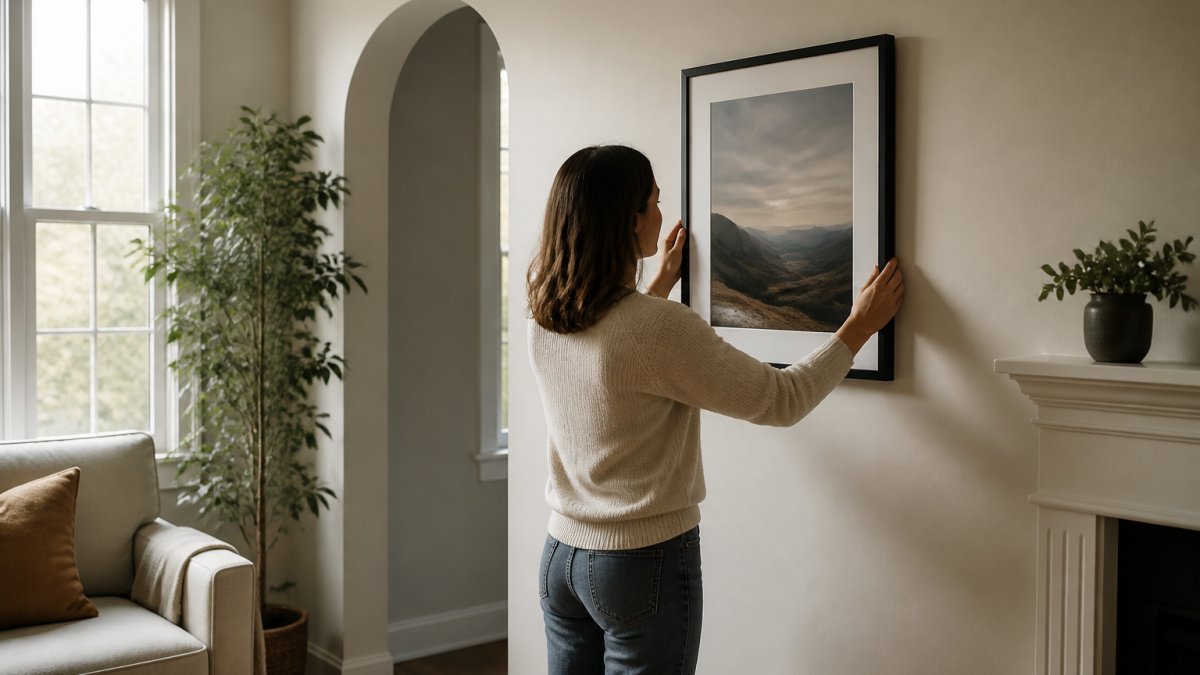
Framing, Glass, and UV Protection
Framing is your first line of defense. Use UV-filtering glass or acrylic, which blocks most ultraviolet rays that attack dye stability. Add an acid-free mat and backing board so the print never touches cardboard. Keep the frame off exterior walls, where temperature swings are worst.
Watch out: cheap "non-glare" glass without UV coating looks protective but does little for lightfastness.
Temperature, Humidity, and Where to Hang a Print
Hang prints on interior walls, out of direct sun, away from radiators and vents. Aim for stable indoor conditions. High humidity encourages mold and accelerates degradation; dry heat cracks emulsion. A hallway or interior living room wall beats a sun-drenched entryway every time.
Does Photographic Paper Go Bad?
Yes, photographic paper can go bad, but usually before printing, not after. Unexposed paper has a shelf life. Old paper fogging, shifted color balance, and reduced contrast are common with expired stock.
Once printed and processed correctly, the paper itself is stable. The dyes are what fade. Maintaining a controlled environment remains the most effective way to preserve archival print quality for generations to come.
How to Identify Which Paper Version You Own
Paper generation changes the longevity estimate, so knowing your version matters. The problem is that most prints carry no obvious label, and the marks that do exist are easy to misread. Here is how to work backward from the print in your hand to the paper it was made on.
Start With the Back of the Print
Turn the print over under a bright, angled light and look for:
- A repeating Fuji wordmark or logo in the paper backing, this confirms the paper family but usually not the generation.
- A batch or order code printed or stamped on the back, this is the most useful clue, because a lab can often trace it to the paper line and processing date.
- Edge printing on machine-processed prints, some labs print a small code or date along the border that identifies the order.
Write down anything you find before you frame the print. Once it is behind a mat and backing board, those marks are gone.
Read the Surface Finish
Surface finish narrows the product line. Matte, luster, and glossy finishes vary by product family, and a lab that knows its paper stock can often match a finish to a specific line. Note the sheen, the texture, and whether the surface shows fingerprints easily. A luster finish with a subtle texture points to one family; a high-gloss finish points to another.
Ask the Lab, and Ask the Right Question
"What paper did you use?" often gets a generic answer. Ask instead:
- Which Crystal Archive product line and generation was used?
- What was the processing date and the order number?
- Can the lab pull the spec sheet for that paper?
Keep the lab receipt or spec sheet with the print. If you are ordering new prints, ask the lab to note the paper line and generation on the order confirmation so you never have to guess later.
Use the Print Date as a Clue
Compare the date of printing with known product launches. A print made years ago was almost certainly made on an earlier generation than one produced today, and that shifts which longevity estimate applies. If you know roughly when the print was made, you can narrow the likely paper version even without a code.
When You Can't Identify the Version
If the marks are gone and the lab has no record, assume standard display conditions and protect the print anyway. Good framing, UV-filtering glazing, and a stable indoor location help every generation. The identification step is about calibrating your expectations, not about deciding whether the print is worth protecting.
Why Crystal Archive Paper Still Beats Inkjet for Wall Art
We build our wall art on high-resolution Fuji Crystal Archive photo paper with a premium luster finish, for definition and clarity.
Choosing Wall Art Built to Hold Its Color
Color shift is the real enemy, and the fix is a combination of the right paper, the right framing, and the right wall.
At American Luxury Gifts, every piece is handmade in Virginia on premium luster Fuji Crystal Archive photo paper, curated with artists and photographers for high resolution and clarity. If you want thoughtful, high-quality decor, explore the collection.
Frequently Asked Questions
Does Fuji Crystal Archive paper fade over time?
It can, but fading is slow under normal indoor conditions and much faster under direct sun or UV light. Crystal Archive is a silver-halide color negative paper with a dye image, and its stability depends heavily on display and storage. Treat any single longevity number with caution, since display and storage conditions strongly affect how a print holds up.
How long do photo lab prints last in dark storage versus on display?
Dark storage is far gentler than display. Kept in an album or archival box, away from light, heat, and humidity swings, a color print is far more stable. On open display, light exposure and ultraviolet rays drive the dye image toward color shift and fading. Framed under glass with UV filtering sits between the two.
Does photographic paper go bad before it is printed?
Yes. Unused photographic paper has a shelf life, and heat, humidity, and age cause paper fogging and color shifts before exposure. Professional labs store paper cool and dry and track processing conditions closely. For a finished print, the equivalent risk is degradation from the environment: damp basements, hot attics, and direct sunlight all shorten print longevity. If you are buying wall art, ask how the paper was stored and when it was printed, since fresh stock and controlled processing conditions matter as much as the paper type.
How can I prevent photo prints from fading?
Keep prints out of direct sun and away from windows that get hours of strong light. Frame behind UV-filtering glass with an acid-free mat so the print does not touch the glazing. Hang art on interior walls rather than above radiators or in steamy bathrooms, and keep temperature and humidity steady. Store loose prints flat in archival boxes, not in a hot garage. For irreplaceable images, scan at high resolution and keep a digital backup, so a fading print can be replaced rather than lost.
Ready to fill a wall with art that stays beautiful? Browse our curated collections, find the piece that fits your space, and get started with American Luxury Gifts today.


