Creating a Calming Space with Wall Art: A Practical Guide
A restful room doesn’t require bare walls or a strict color scheme. Creating a calming space with wall art starts with choosing imagery you enjoy and considering how it fits the room around it. If you’re unsure what to choose or worry a print may clash with your decor, a few practical checks can help you make a confident decision.
Start with the colors and furnishings already in the room. Then compare possible prints by subject, visual detail, contrast, and personal meaning. The goal is a focal point that feels considered and suits your taste, not a promise of a particular emotional effect.
This guide walks you through choosing and arranging wall art so your space feels more personal and balanced.
Key Takeaways
- Start with the atmosphere you want the room to suggest. “Calming” is a personal visual impression, not a guaranteed emotional or therapeutic result.
- Compare artwork by subject, its relationship to the room’s colors, visual complexity, and the meaning it holds for you.
- Before deciding where to hang a print, consider the furniture, sightlines, and nearby visual activity.
- Test your focal point and arrangement, then step back to see whether the wall feels balanced rather than crowded.
- Use your preferred atmosphere, personal connection, and room context to explore categories such as Animals & Nature, Home Decor, and Inspirational.
How can wall art help create a calming space?
Wall art can shape a room’s visual impression, but “calming” is personal. It describes how a space looks and feels to you, not a guaranteed emotional or therapeutic effect. A print’s subject, color, contrast, and placement all contribute to the atmosphere alongside the rest of the room. Creating a calming space with wall art starts with your preferences, not a universal rule.
For another perspective on how design choices shape a room, watch this video:
What does a calming space look like to you?
Begin by naming the qualities you want your room to suggest. Should it feel quiet, open, grounded, or personal? Your answer gives you a practical filter when comparing prints. One person might prefer a landscape with broad, simple shapes; another may prefer an abstract design. These are matters of taste, not promises of a particular emotional result.
Why can wall art affect a room’s visual impression?
Color, subject, contrast, and placement influence what catches your eye and how a print relates to the room. A high-contrast image may stand out against a subdued wall, while artwork that shares colors with nearby furnishings may feel more connected to its surroundings. Lighting and your own associations with an image also matter. An overview of color psychology can offer context, but it shouldn’t be treated as a fixed decorating formula.
Calming wall art is art that supports the atmosphere you want to create. The same image can feel quiet in one setting and visually prominent in another, depending on nearby furniture, light, and decor.
Keep the process practical: choose imagery that suits your preferred atmosphere, compare it with the room’s colors and furnishings, and consider sightlines and nearby visual activity before deciding where it belongs. Step back and ask whether the artwork feels connected to the space or competes with it. This review helps you make a considered choice without assuming one subject or palette works for everyone.
Which wall art choices can make a room feel more restful?
Compare wall art by subject, color, visual detail, and personal meaning, then consider how each option relates to the room’s existing decor. There’s no single palette or image that feels restful to everyone. Nature imagery, abstract designs, or meaningful themes may suit your space, depending on what you enjoy looking at and how the art relates to nearby furnishings.
How should you choose colors and imagery?
First, notice the colors already present in the room, including those in the rug, upholstery, or bedding. Then decide whether you want the artwork to echo those tones or introduce a deliberate contrast. Nature imagery, abstract forms, and personally meaningful themes offer different visual directions. None guarantees a particular mood, so let your preferences and the room guide the choice.
| What to compare | Questions to ask | How it may fit |
|---|---|---|
| Subject | Do you prefer nature, abstract forms, or a meaningful theme? | Choose imagery that feels at home in the room and reflects your taste. |
| Color relationship | Does the art echo existing colors or add contrast? | Either approach can work. Consider the full palette rather than following a fixed color formula. |
| Visual complexity | Does the composition have a few clear elements or many details? | Compare its level of detail with nearby patterns and decor. |
| Personal meaning | Does the subject connect with a memory, interest, or value? | A personal connection can make the choice feel more distinctly yours. |
How much visual detail feels right?
Compare a simple focal image with a busier composition from across the room, not just up close. Strong contrast or intricate detail can draw attention. It may complement a pared-back setting or compete with other decor. For example, if your room already has patterned furnishings, a less detailed print may provide a more balanced counterpoint. The best fit depends on your taste and the surrounding room.
Use the table as a starting point, then picture each option in the space you’re decorating. If nature imagery appeals to you, Animals & Nature prints offer one direction. Abstract artwork or a personally meaningful theme may suit your room just as well—and for those who appreciate original, culturally expressive paintings, collections such as Artgal.Online provide inspiration for distinctive focal points. Creating a calming space with wall art is about finding a visual fit, not following a universal rule.
How do you arrange wall art to create a calming space?
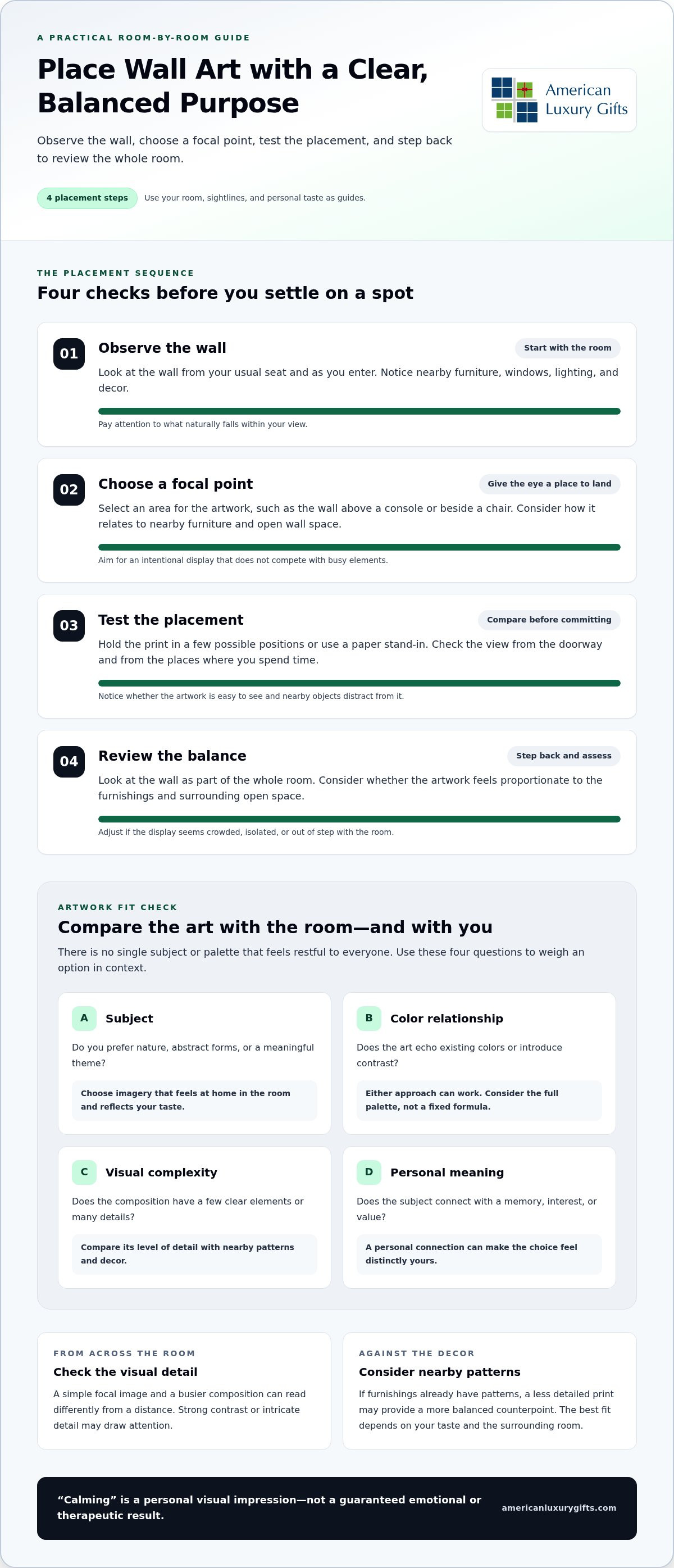
Arrange wall art by considering how you use the room, choosing a focal point, testing possible placements, and reviewing the overall balance. Look at the furniture, sightlines, and nearby visual activity before settling on a spot. This sequence helps the artwork feel connected to the space rather than crowded in or placed without a clear purpose.
- Observe the wall. Notice what you see during ordinary use of the room. Look at the wall from your usual seat or as you enter, and note nearby furniture, windows, lighting, and decor. A wall that naturally falls within your view may suit a print you want to enjoy often.
- Identify a focal point. Choose one area for the eye to land, such as the wall above a console or beside a chair. Consider how the artwork relates visually to nearby furniture and open wall space. Aim for an intentional display rather than one competing with several busy elements.
- Test the placement. Hold the print in a few possible positions or use a paper stand-in to compare them before committing. Check the view from the doorway and from the places where you spend time in the room. Notice whether the art is easy to see and whether nearby objects distract from it.
- Review the balance. Step back and look at the wall as part of the whole room. Ask whether the artwork’s visual weight feels proportionate to the furnishings and surrounding open space. Adjust its position if it seems crowded, isolated, or out of step with the room.
Where should you place a calming print?
Choose a wall you naturally notice during everyday use, then consider how the image relates to nearby furniture. A print near a chair, for example, can become a point of interest, while artwork above a console can help anchor that area—especially when paired with complementary tabletop accents like decorative ceramics or niche luxury fragrances from dotperfumegallery.com. Give the focal point enough space to feel intentional rather than surrounded by competing details.
How can you keep a display visually balanced?
For multiple pieces, use consistent spacing and give the images a clear relationship, such as a shared subject or visual style. The grouping should read as one considered display, not as separate pieces competing for attention. Step back between adjustments and view the arrangement from different angles before settling on the final placement.
How can you choose calming wall art that feels personal?
Connect the atmosphere you want with a subject that matters to you, then check how it fits the room’s colors, furnishings, and available wall space. A personal choice doesn’t need to follow a trend or promise a particular emotional effect. It should suit your taste and feel like a considered part of your home.
How do you connect a print to your own sense of calm?
Think about the images, places, or ideas you enjoy seeing in your everyday surroundings. Nature imagery may suit you because you like looking at natural scenes; an inspirational message may feel more personal if it reflects a value or story that matters to you. Meaningful art can express your taste without guaranteeing that you’ll feel a certain way. For a deeper reflection on choosing art around your own experiences, explore this guide to inspirational wall art and personal stories.
Use this short decision guide to narrow your options:
- Desired atmosphere: Name the quality you want the room to suggest, such as open, grounded, or quiet.
- Personal connection: Choose a subject or message you’ll be glad to see regularly.
- Room context: Consider the existing decor, colors, furnishings, and wall you’re decorating.
- Visual fit: Decide whether the artwork’s detail and contrast feel balanced with its surroundings.
Categories such as Animals & Nature, Home Decor, and Inspirational offer different starting points for finding a subject with personal meaning. Prints are handmade in the USA on luster-finish Fuji Crystal Archive photo paper. For more ideas on matching a print to your home, read this guide to choosing and styling meaningful wall art prints.
What should you consider before making a final choice?
Before deciding, check that the subject, colors, and level of detail suit the room’s existing decor. Then consider the wall itself: one print can create a focused impression, while a coordinated group may suit a larger area or tell a connected visual story. Picture the option in place and notice whether it feels intentional beside the furniture and open wall space.
With those details in mind, creating a calming space with wall art becomes a personal choice grounded in meaning and visual fit. You can contact American Luxury Gifts with questions about choosing wall art.
Make Your Space Feel More Like Yours
Creating a calming space with wall art doesn’t require a dramatic redesign. Choose a subject you enjoy seeing and consider how it helps the room come together. A meaningful print can make a space feel more personal, while thoughtful placement and surrounding decor help the display feel considered.
Picture the wall as part of your everyday routine. Choose art that suits both the room and your taste, then adjust the arrangement until it feels settled. American Luxury Gifts prints are handmade in the USA.
Your home can reflect the people and ideas that matter to you. Explore American Luxury Gifts’ wall art collections to find a print that feels right for your space.
Frequently Asked Questions
Does calming wall art have to show nature?
No. Nature scenes are one possibility. A family keepsake, a faith-based image, or artwork tied to a favorite interest may feel more fitting in your home. Consider the room’s purpose, too: art you enjoy in a quiet corner may differ from what you’d choose for a shared living area. Let your own associations guide you instead of assuming one subject creates the same effect for everyone.
Can colorful wall art still feel calming?
Yes. A colorful print can suit your preferred atmosphere if its color and visual presence feel at home in the room. For a practical check, notice whether the print’s strongest color appears elsewhere in the space, even in a small detail such as a cushion or book cover. You don’t need to repeat every shade. The goal is a combination you enjoy seeing, not a guaranteed response to color.
Should calming wall art match the colors already in a room?
No. Exact matching can make a room feel overly coordinated, while a thoughtful contrast may add character. Instead of matching the wall, you might connect the art to a smaller detail, such as a color in a throw or decorative object. If you’re choosing between two prints, compare each with the room as a whole rather than judging its color in isolation.
Can one piece of wall art make a room feel calmer?
Yes. A single print can give a small wall or tucked-away corner a finished look. For example, one image beside a desk may make that area feel more personal without adding a group of pieces. Consider how the print works with the room’s everyday purpose and your taste. It can contribute to the space’s visual impression, but it can’t guarantee a particular feeling or replace professional care.
How do you make a calming gallery wall without making it look busy?
Give the display a clear organizing idea before selecting pieces. You might group images around a shared subject, a family story, or a consistent visual tone. This helps the arrangement feel intentional, even when individual prints differ. Before committing, ask whether each piece adds something distinct. If two images feel redundant or one draws attention away from the rest, reconsider the selection.
Is abstract art suitable for a calming space?
Yes. Abstract art can be a good fit if you enjoy its shapes and forms, even when the image doesn’t depict a recognizable subject. Notice what draws your attention first: a sweeping line, a repeated shape, or a cluster of forms. Then consider whether that visual character suits the room’s purpose. Your response to abstract art is personal, so choose a composition you’re comfortable living with.


