What to Hang on a Large Empty Wall: 7 Thoughtful Ideas
The biggest wall in a room doesn’t automatically need a crowded gallery wall. If you’re wondering what to hang on a large empty wall, start by deciding how you want the space to feel: calm and focused, collected over time, or unmistakably personal.
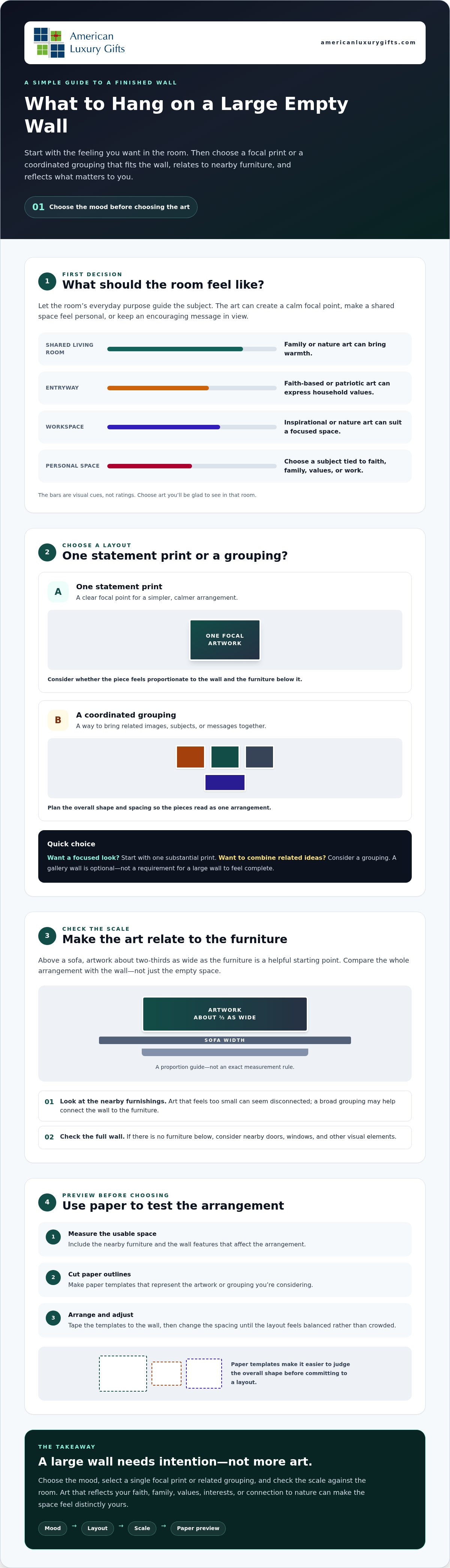
A large wall can feel complete with one substantial artwork, a balanced pair, or a thoughtfully arranged group of prints. Choose the layout first, then look for art that suits the wall’s proportions and reflects your interests, faith, family, or values. Above a sofa, artwork about two-thirds as wide as the furniture is a helpful starting point.
Not sure what will fit? Use paper cutouts to test the arrangement before you buy. Adjust the spacing until it feels balanced rather than crowded. In this guide, you’ll find seven practical approaches, ways to judge scale and placement, and ideas for choosing meaningful art that feels at home in your space.
Key Takeaways
- Decide how you want the room to feel, then choose art that supports that mood.
- Compare a single statement print with a coordinated grouping based on your wall and nearby furniture.
- Measure the usable space and use a paper outline to preview the layout before choosing artwork.
- When deciding what to hang on a large empty wall, consider art that reflects your faith, family, values, or connection to nature.
What to Hang on a Large Empty Wall: Start with the Feeling You Want
To decide what to hang on a large empty wall, choose a substantial print, a coordinated grouping, or themed art that suits the room. Start with the feeling you want to create, then select a subject that supports it. The goal isn’t to cover every inch. It’s to give the wall a focal point that feels connected to your home.
A living room might call for family or nature prints that bring warmth to a shared space. In an entryway, patriotic or faith-based art can express what matters to your household as guests arrive. For a home workspace, inspirational art can keep an encouraging message in view during the day. Profession-themed art is another option when you want to honor the work that matters to someone in your household.
For more ideas on approaching a large wall, watch this video:
Which wall-art idea suits the room?
Let the room’s everyday purpose guide the subject. Inspirational prints can suit a quiet corner where you pause or reflect. Family-themed art can make a shared living room feel more personal, while faith-based prints may feel at home in a space where your beliefs are part of daily life. Nature art can bring an open, restful quality to a workspace or sitting area. These are starting points, not rules. Choose a subject you’ll be glad to see in that room.
Thinking about interior design principles can help you consider how the artwork relates to the room’s use, colors, and overall style. Keep the composition intentional: one focal print or a connected group can make a stronger impression than filling the wall just because space is available.
What should the artwork communicate?
Ask what you want the wall to express: a value, an interest, a belief, or a connection to someone you love. A family print in the living room, for example, can make a shared gathering place feel more distinctly yours. Choose art that reflects the people who use the room and the message you want it to carry.
Let the room’s purpose guide the art’s subject, and let the subject give the room personal meaning. That simple choice helps a large wall feel complete without making it feel crowded.
Should You Choose One Large Print or a Gallery Wall?
Choose one large print for a clear focal point and a simpler look. Choose a gallery wall when you want to bring several related images or themes together. The right option depends on the wall’s usable space, nearby furniture, and how much visual detail you want. A gallery wall can make a large surface feel personal, but it isn’t necessary for the space to feel finished.
| Choose | Best suited to | Consider |
|---|---|---|
| One statement print | A clean, focused arrangement | It should feel proportionate to the wall and any furniture below it. |
| A coordinated grouping | Combining related images, subjects, or messages | Plan the overall shape and spacing so the pieces read as one arrangement. |
Stand back and consider the whole wall, not just the empty area. Above a wide sofa or console, artwork that takes up too little visual space can seem disconnected from the furniture. A broad grouping may help connect the art to the furnishings, while one print can work well if it gives the arrangement a strong focal point. On a wall without furniture below it, consider how the art will relate to nearby doors, windows, and other visual elements. Space planning is part of the professional and comprehensive practice of interior design, and the same principle can help artwork feel intentional.
When does one statement print make sense?
Choose a single focal artwork when you want the wall to feel calm and uncluttered. One piece can make an impression without requiring several prints to coordinate. If you prefer a tactile, sculptural statement such as handcrafted metal art, visit Tintin to explore decorative options. Before deciding, compare its shape and visual scale with the surrounding furnishings. Aim for a piece that feels connected to the space, not undersized or overwhelming.
When is a gallery wall a better fit?
A gallery wall suits you if you want to combine related images or themes in one display. Arrange the pieces on the floor first, or cut paper templates and tape them to the wall. Adjust the spacing and overall outline until the grouping feels balanced. For more inspiration, explore unique wall art ideas and meaningful wall-art styling guidance.
If you’re deciding what to hang on a large empty wall, let the room’s proportions guide the format, then choose art that makes the arrangement feel like yours.
How Do You Make Wall Art Look the Right Size?
Make wall art look appropriately sized by measuring the usable wall, accounting for nearby furniture, and testing the layout before you hang anything. A paper mock-up shows how much space a print or grouping will occupy. There’s no single size formula for every room. Aim for an arrangement that feels connected to its surroundings without competing with them.
- Measure the usable wall area. Record the width and height of the open space where the artwork will go. Exclude doors, windows, and adjoining wall sections that aren’t part of the display area.
- Note the nearby furniture. Check the position of a sofa, console, desk, or other large piece. Artwork should relate visually to the furniture rather than seem detached or crowded against it.
- Check the listed artwork dimensions. Before ordering, compare the product dimensions with your measurements. For a grouping, include the full arrangement and the gaps between pieces.
- Test and reassess. Use paper templates to preview the planned footprint, then step back and adjust the size, alignment, or spacing.
What should you measure before choosing art?
Focus on the part of the wall that can actually hold the arrangement. For example, a wide wall broken up by a doorway may have less usable space than its full width suggests. Note the position of furniture, too. A print above a desk may need a different visual footprint than art on an uninterrupted wall, even if both walls are similar in size.
How can you preview the arrangement?
Cut paper to match the dimensions of one print, or make separate templates for a group. Tape them in place and look from the room’s usual viewing spots. The spacing changes a grouping’s overall footprint: wider gaps make it feel broader, while closer spacing and consistent alignment can help the pieces read as one arrangement.
A paper mock-up lets you judge how art relates to the wall and furniture before you commit to hanging it. If the layout feels too small or too dominant, revise the template first.
Before hanging, identify your wall type and choose hardware rated for the artwork’s weight. Use a stud finder when appropriate, follow the hardware instructions, and make sure the mounting method suits both the wall and the piece.
How Can Meaningful Wall Art Complete a Large Empty Wall?
Meaningful wall art makes a large wall feel personal by connecting its subject to the people, values, or interests the room represents. Choose the message first, then decide whether one print or a grouping suits the space. Inspirational, faith-based, patriotic, family, abstract, and nature prints can each bring a different character to a room when the theme genuinely reflects your household.
Which art themes can make the wall feel personal?
Think about what you want to see in the room day after day. An inspirational print can keep an encouraging message in view. Family art may feel fitting in a shared living space, while faith-based art can express a belief that’s central to your home. Patriotic prints may suit a household proud of its connection to service or country. Abstract or nature art can be a considered choice when color, form, or the outdoors matters more than a specific message.
The strongest choice doesn’t need to explain everything about you. It should feel relevant to the room and familiar to the people who use it. American Luxury Gifts offers physical prints in themed categories such as inspirational, Christian and spiritual, military and patriotic, love and family, abstract, and animals and nature.
How should you narrow down the final choice?
Start with one question: what do you want this wall to say? Once you have a clear answer, choose a single print for a focused statement or a grouping if you want to bring related subjects together. If you’re drawn to an encouraging message, browse these inspirational wall-art ideas for ways to connect a message with your own story.
Before purchasing, review the artwork details and listed dimensions. Compare those measurements with the usable wall space and nearby furniture, then consider whether the arrangement will feel cohesive rather than crowded. A meaningful subject can draw attention, but thoughtful placement gives it room to be appreciated.
If you’re still weighing what to hang on a large empty wall, let the room’s purpose and the message you want to express narrow the options. For help finding a suitable direction, contact American Luxury Gifts.
Give Your Wall a Meaningful Finishing Touch
The best answer to what to hang on a large empty wall starts with the feeling you want the room to hold. Choose a single print for a clear focal point or a coordinated grouping to bring related images and themes together. Measure the usable space and preview the arrangement before hanging so the artwork feels balanced with the room.
Then make the choice personal. Inspirational, faith-based, patriotic, family, abstract, and nature-themed prints can help your wall reflect what matters to you. American Luxury Gifts offers a range of themed wall-art categories to help you explore subjects that suit your space and message.
Trust your eye, take time to choose a subject that feels true to your home, and let the finished wall tell a story you’ll be glad to live with.
Frequently Asked Questions
What is the best thing to hang on a large empty wall?
The best choice is artwork that feels at home with the room’s character, not simply the biggest piece you can find. If you’re considering what to hang on a large empty wall, notice the room’s colors, lines, and overall style. A print that echoes an existing color or introduces a subject you care about can make the wall feel connected to the rest of your home.
How do you decorate a large wall without making it look cluttered?
Keep the wall visually calm by giving the eye a clear place to land and avoiding several competing focal points nearby. In an open-plan room, consider how the wall relates to art and furnishings in adjoining areas, too. A consistent color or subject can help separate pieces feel connected, while open space around the display lets each part remain easy to appreciate.
Should you hang one large picture or create a gallery wall?
Choose based on how much visual variety you want to live with. One picture presents a single idea clearly; a gallery wall can tell a broader story through several related subjects. Think about whether you prefer a unified image or a display with details to notice. You can also choose a grouping that leaves room to add related pieces over time.
How do you choose the right size art for a large wall?
Consider the artwork’s orientation and visual weight as well as its measurements. A tall, narrow piece and a wide landscape print can occupy similar areas but create very different impressions. Review the listed dimensions and image proportions before buying, then consider how the subject will read from the places where you usually sit or enter the room. Let the art’s shape suit the wall.
Can wall art make a large room feel more personal?
Yes. Art can bring a personal detail into a room without requiring a display of photographs or keepsakes. A subject connected to a family tradition, favorite interest, faith, or sense of service can express something meaningful in a lasting way. Choose a theme that feels true to the people who use the room, and consider whether its message will still feel welcome in everyday life.
How do you plan a gallery wall before hanging the artwork?
After deciding on the arrangement, take a photo of the layout and label each piece’s position so you can refer to it during installation. Check that the design has a clear visual anchor and that no piece feels disconnected from the others. Before making holes, confirm the hanging points and select hardware suited to both the artwork’s weight and your wall type.


