Wall Art for Therapist Office: A Practical Buying Guide
What if the most reassuring-looking print isn’t the right choice for your therapy office? Choosing wall art for therapist office spaces means weighing more than color or trend. A message that feels encouraging to one client may seem prescriptive to another, while highly personal or visually busy artwork can pull focus from the room’s purpose.
Before you buy, consider who will see the artwork, what they’ll be able to read from their seat, and how the piece fits the room. A thoughtful choice can suit your practice and feel welcoming without implying that decor can treat or improve mental health. This guide compares message-led, abstract, and profession-themed art, then walks through practical ways to assess tone, visual style, size, and placement. Use the questions and checklist to decide what belongs in a client’s line of sight and what may work better elsewhere. The aim is a considered space that reflects your professional voice without asking the artwork to speak for you.
Key Takeaways
- Choose wall art for therapist office spaces based on your practice, clients, and room, not decoration alone.
- Compare motivational, inspirational, abstract, and profession-themed art by how direct the message feels and how visually prominent it is.
- Measure the wall and account for furniture, seating, doorways, and sightlines before selecting a print size.
- Check the live product listing for exact dimensions and other details, then consider whether the artwork fits your practice’s intended atmosphere.
What wall art for a therapist office should communicate
Choose wall art for a therapist office that suits the practice, the clients who visit, and the room itself. Artwork contributes to a room’s visual impression, but it shouldn’t be presented as treatment or a promise of therapeutic outcomes. Consider whether a piece feels welcoming, fits the practice’s tone, and keeps the focus where you want it.
Environmental psychology explores how surroundings relate to people’s experiences and behavior. It can be a useful lens for thinking about office decor, without suggesting that a particular print will produce a specific response. Art can reflect a therapist’s identity, but a piece in a client-facing room will also be seen by people with different preferences. A personal favorite may express your taste; a broadly welcoming image may be a better fit for shared space.
For a visual walkthrough of therapy-office design, watch this video:
What makes artwork feel appropriate in a therapy office?
Start with the practice’s tone, the clients it serves, and how much visual activity feels right for the room. A nature-inspired print, for example, can add color and imagery without telling visitors how they should feel. Strongly directive wording may encourage one person but feel prescriptive to another. Before choosing text, read it from a visitor’s perspective: is the meaning clear, does it fit your professional voice, and could it be interpreted as an instruction? Avoid assuming every client or setting shares the same preferences.
Should office art be motivational, abstract, or neutral?
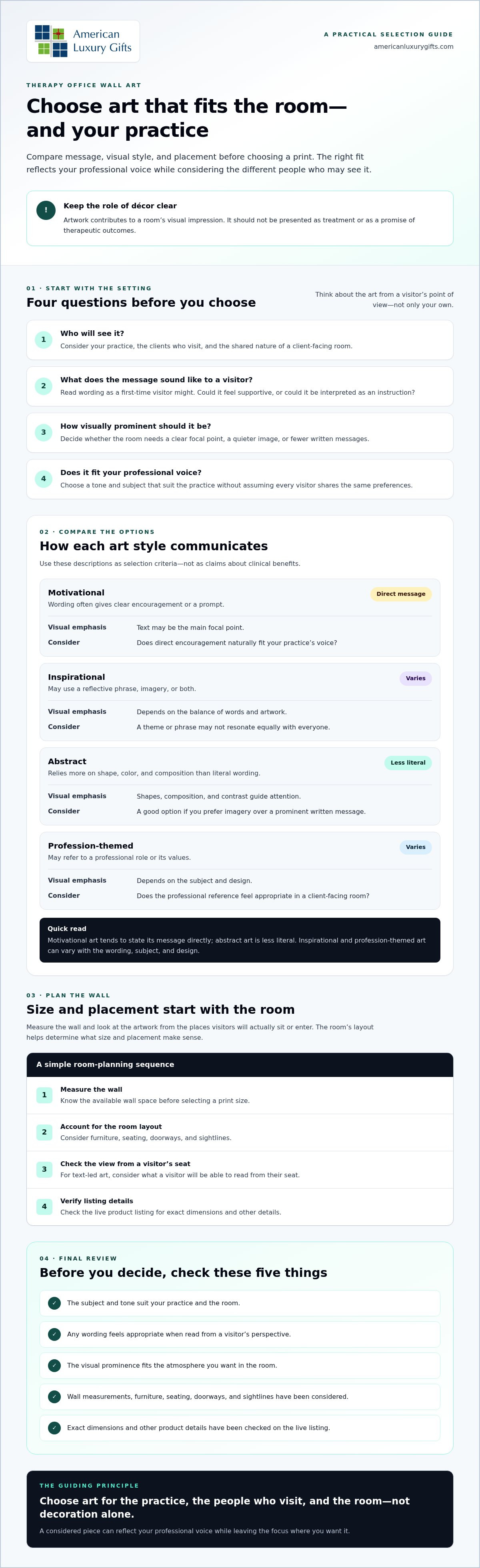
Motivational art puts its message front and center, while abstract art relies more on shape, color, and composition than literal wording. Neutral artwork is another option if you prefer fewer written messages or want the room to feel visually restrained. There’s no universal right choice. Decide whether the room needs a clear focal point, a quieter image, or art that reflects your practice’s voice. If you’re considering message-led prints, this motivational wall art guide offers ideas for weighing wording and style.
How to compare wall art styles and messages for a therapist office
Compare each option by how directly it speaks, how much visual attention it draws, and how broadly it may suit visitors. These are practical selection criteria, not evidence that a particular style produces clinical benefits. To narrow your choices, first decide whether you want the art to communicate a message, add visual interest without words, or reflect your professional identity. The best wall art for therapist office settings depends on the practitioner’s goals and the feel of the room.
| Art style | Message directness | Visual emphasis | Potential fit for visitors |
|---|---|---|---|
| Motivational | High: wording often offers a clear encouragement or prompt. | Text may be the main focal point. | May suit a practice whose voice naturally includes direct encouragement; consider how different clients could read the message. |
| Inspirational | Varies: may use a reflective phrase or communicate through imagery. | Depends on the balance of words and artwork. | Can express an uplifting tone, but the specific wording or theme may not resonate equally with everyone. |
| Abstract | Low: meaning is generally less literal and may not rely on text. | Shapes, composition, and contrast guide attention. | Worth considering if you prefer imagery over a prominent written message. |
| Profession-themed | Varies: may refer to a professional role or its values. | Depends on the subject and design. | Can reflect the therapist’s professional identity; check current listings and consider whether the reference feels appropriate for clients. |
When does motivational or inspirational art fit the practice?
Choose explicit wording when it genuinely reflects your approach and the room’s intended tone. Before buying, read the phrase as a first-time visitor might. Could it sound supportive, or could it feel like an instruction about how to think or feel? A broad, reflective message may suit your professional voice better than a directive quote. For more ideas on uplifting themes, explore inspirational wall art ideas. The creating a therapeutic environment resource from Mass.gov also discusses positive distractions, including nature pictures. Treat these as decor considerations, not treatment claims.
When might abstract or profession-themed art be a better fit?
Abstract art offers visual interest without placing a written message at the center. It may be worth considering if you want to avoid text that visitors could interpret differently. Profession-themed art can reflect the therapist’s identity, but designs vary. Review the listing rather than assuming a therapist-specific print is available. If you’re weighing nonliteral imagery, see this abstract wall art selection guide.
How do you choose the right size and placement for office wall art?
Measure the intended wall area, note nearby furniture and existing decor, then compare your measurements with the dimensions shown on the print listing. Also check what a client can see from each seat, whether the artwork crowds a doorway or competes with signage, and how it relates to the room’s other visual elements. You don’t need to fill every open space.
What should you measure before buying office artwork?
Use a tape measure to record the width and height of the area where you’re considering art. Note windows, furniture, switches, and other wall decor so you can plan the whole arrangement rather than measuring an empty section in isolation. Then check the available print dimensions on the product listing. Don’t assume a size or format is offered if it isn’t specified.
To preview scale, cut paper to match the listed dimensions or outline the proposed placement with removable painter’s tape. View the mock-up from the doorway and from each main seat. If the room has more than one client seating position, check each one. A print that looks balanced while you’re standing beside the wall may feel oversized or too prominent from a chair.
Where can art work well without dominating the room?
Start with the wall visible from the main seating area, then assess the visitor’s natural line of sight. Keep doorways clear and consider how the artwork relates to furniture, windows, and other visual elements. The research on therapy office design discusses design choices such as artwork as part of the office environment, but placement should suit your room rather than promise a clinical effect.
One focal print can create a simple arrangement; several smaller pieces can work if they feel composed rather than crowded. These are layout options, not universal rules. If a print includes prominent text, check whether it’s easy to read from a seat and whether it competes with conversation or signage. Aim for an arrangement that feels balanced and keeps the room easy to take in, rather than turning every available wall into a display.
For broader styling ideas, explore wall art print styling guidance.
Ask about a wall art print’s listed dimensions
How can you choose therapist-office wall art with confidence?
Choose wall art for therapist office spaces by checking the message, visual style, fit on the wall, and accuracy of the product listing. Then consider whether the piece suits the practice’s intended atmosphere and is likely to feel appropriate to its visitors. A careful review helps you select decor with confidence without treating artwork as a clinical tool.
What should you check before ordering a print?
Use this checklist to compare your preferred print with the room and your expectations:
- Message: Read all wording carefully. Consider whether it reflects the practice and could be interpreted in different ways.
- Visual style: Decide whether the artwork’s imagery, text, and visual emphasis feel right for the space.
- Wall space: Compare the listed dimensions with the intended area, furniture, and surrounding decor.
- Listing details: Confirm the exact artwork, wording, dimensions, and other product information shown on the current listing. Don’t assume framing or other features are included unless the listing says so.
- Practice fit: Ask whether the piece feels consistent with the atmosphere you want to create and appropriate for the clients who may visit.
Product details can vary, so review the live listing before purchasing. If a detail that matters to your decision isn’t clearly stated, contact the retailer to ask rather than guessing.
How can you keep the artwork welcoming and professional?
Choose artwork that expresses the practitioner’s style without making every visitor feel expected to share the same beliefs, preferences, or response to a message. For example, a reflective image may suit a practice that wants less written messaging, while a carefully chosen phrase may fit a professional voice that uses direct encouragement. Neither approach is right for every office.
American Luxury Gifts offers motivational, inspirational, and profession-themed wall art categories. Check current listings for specific designs and product details; don’t assume a therapist-specific design or customization is available. Treat the print as decor that contributes to the room’s appearance, not as a substitute for professional care or a clinical intervention.
Choose art that feels right for your practice
The best wall art for therapist office spaces reflects the practice’s intended atmosphere while remaining considerate of the people who visit. Compare message-led, abstract, and profession-themed options by their tone and visual presence, then measure the wall and check the current listing for exact product details before ordering. Art can contribute to a room’s character, but it shouldn’t be treated as a clinical intervention or a promise of therapeutic results.
American Luxury Gifts is an American-owned e-commerce brand offering motivational, inspirational, and profession-themed wall art categories. Review live listings to confirm the specific artwork and details available, and reach out with questions if something important to your decision isn’t clear.
A thoughtful choice doesn’t need to fill every wall or speak for every client. Focus on a piece that suits your space and professional voice, then explore American Luxury Gifts’ motivational, inspirational, and profession-themed prints to find an option that fits.
Frequently Asked Questions
What kind of wall art is appropriate for a therapist’s office?
Appropriate art depends on the practice’s intended atmosphere, the clients it serves, and the therapist’s preferences. Nature imagery, abstract compositions, or carefully chosen inspirational wording can all be considered, but no single style suits every office. Review the exact artwork and product listing before buying. Choose art for its fit as decor, not because it’s expected to treat or improve a mental health condition.
Is motivational wall art a good choice for a therapy office?
Motivational art can fit if its wording reflects the practitioner’s voice and the tone they want for the room. Direct statements may feel encouraging to some visitors and too directive to others. Compare a quote-based print with less literal imagery, then consider which better suits the space and leaves room for conversation. Motivational artwork is decor, not treatment or a guarantee of clinical results.
What should I look for in wall art for a therapist office?
Consider the message, visual style, intended placement, and fit with the practice. Read any wording closely, and review the current listing for exact product details rather than assuming dimensions, materials, framing, or availability. The artwork should feel consistent with the room while allowing the therapist and client space for conversation. If a listing leaves an important detail unclear, ask the retailer before purchasing.
Where should wall art be placed in a therapist’s office?
Start with the wall visible from the main seating area, then check how the artwork relates to sightlines, furniture, doors, windows, and existing decor. A paper outline made to the listed dimensions can help you preview scale before ordering. Let the room’s layout and intended visual focus guide placement; there’s no single position that works for every therapy office.
Can I personalize therapist-office wall art with a custom message?
Don’t assume a wall-art print can be customized with a quote, name, or practice logo. American Luxury Gifts does not offer custom commissioned artwork, and its product information doesn’t confirm personalized wall-art options. Personalized keepsakes are a separate listed category, but that doesn’t establish that prints can be personalized. Check the current listing or contact the company to ask about a specific request.
Does American Luxury Gifts sell framed therapist-office prints?
American Luxury Gifts does not offer framing services, so don’t assume a print includes a frame or that framed options are available. Review the current product listing for exactly what’s included. If framing affects your decision, contact American Luxury Gifts to clarify the details before ordering. This helps you plan for the finished look without relying on an unstated product feature.


